Sui and Tang Dynasties
A golden age in Chinese history from 581 to 907 CE, when art, culture, and trade flourished.
What is it?
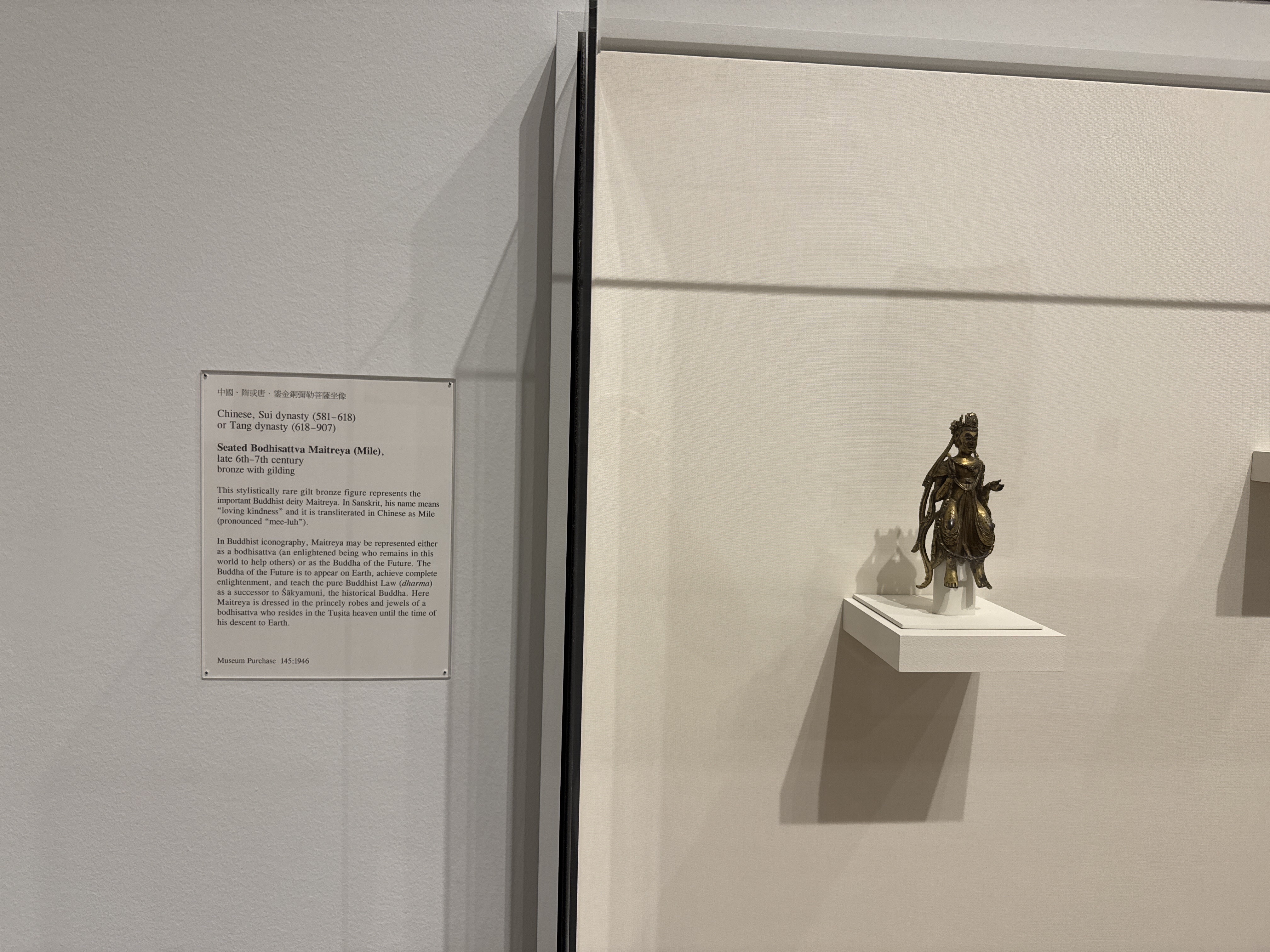
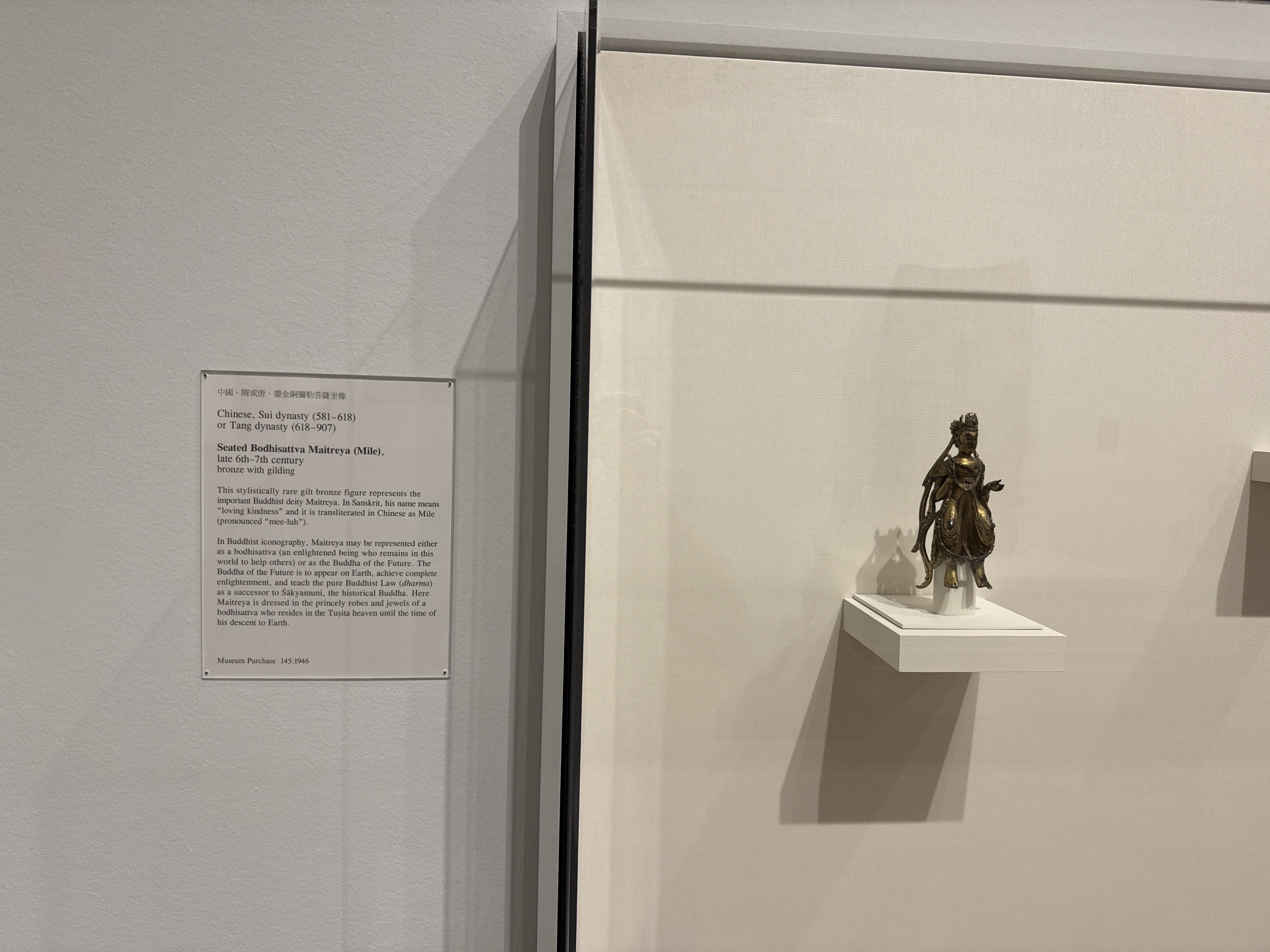
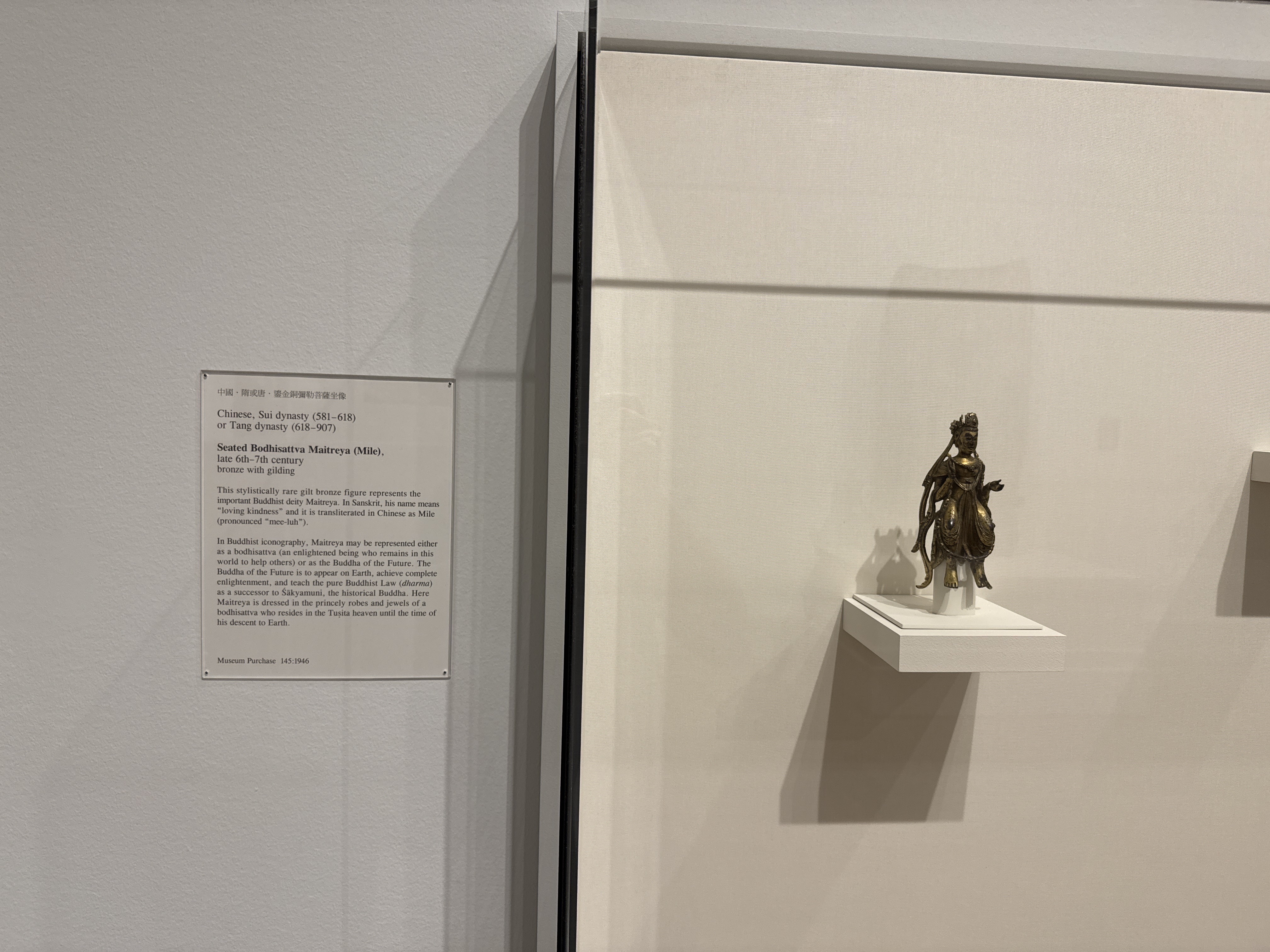
The Sui dynasty (581–618) reunited China after a long period of division. The Tang dynasty (618–907) followed and became one of the most powerful and prosperous periods in Chinese history. During this time, Buddhism became very popular, and many beautiful Buddhist statues were made. The capital, Chang'an (now Xi'an), was a huge city with people from all over the world. The gilt bronze statue of Maitreya Bodhisattva was made during this period. The statue dates from the 6th to 7th century, which falls within the Sui and early Tang dynasties.
Why it matters
The Sui and Tang dynasties produced some of China's greatest art and literature. Many of the most famous Chinese artworks in museums are from this time. Understanding this period helps you understand Chinese culture.
Where you've seen it
This list grows as you capture more exhibits from the Sui and Tang dynasties.
Related
隋唐时期
中国历史上的黄金时代,从公元581年到907年,艺术、文化和贸易繁荣。
这是什么?
隋朝(581-618年)在长期分裂后统一了中国。唐朝(618-907年)随后成为中国历史上最强大、最繁荣的时期之一。在此期间,佛教变得非常流行,制作了许多精美的佛像。首都长安(今西安)是一个巨大的城市,有来自世界各地的人。鎏金弥勒菩萨像就是在这一时期制作的。这尊像可追溯到6至7世纪,属于隋朝和唐朝初期。
为什么重要
隋唐时期产生了中国一些最伟大的艺术和文学。博物馆中许多最著名的中国艺术品都来自这个时期。了解这个时期有助于你理解中国文化。
你在哪里见过它
当你捕捉更多来自隋唐时期的展品时,这个列表会增长。