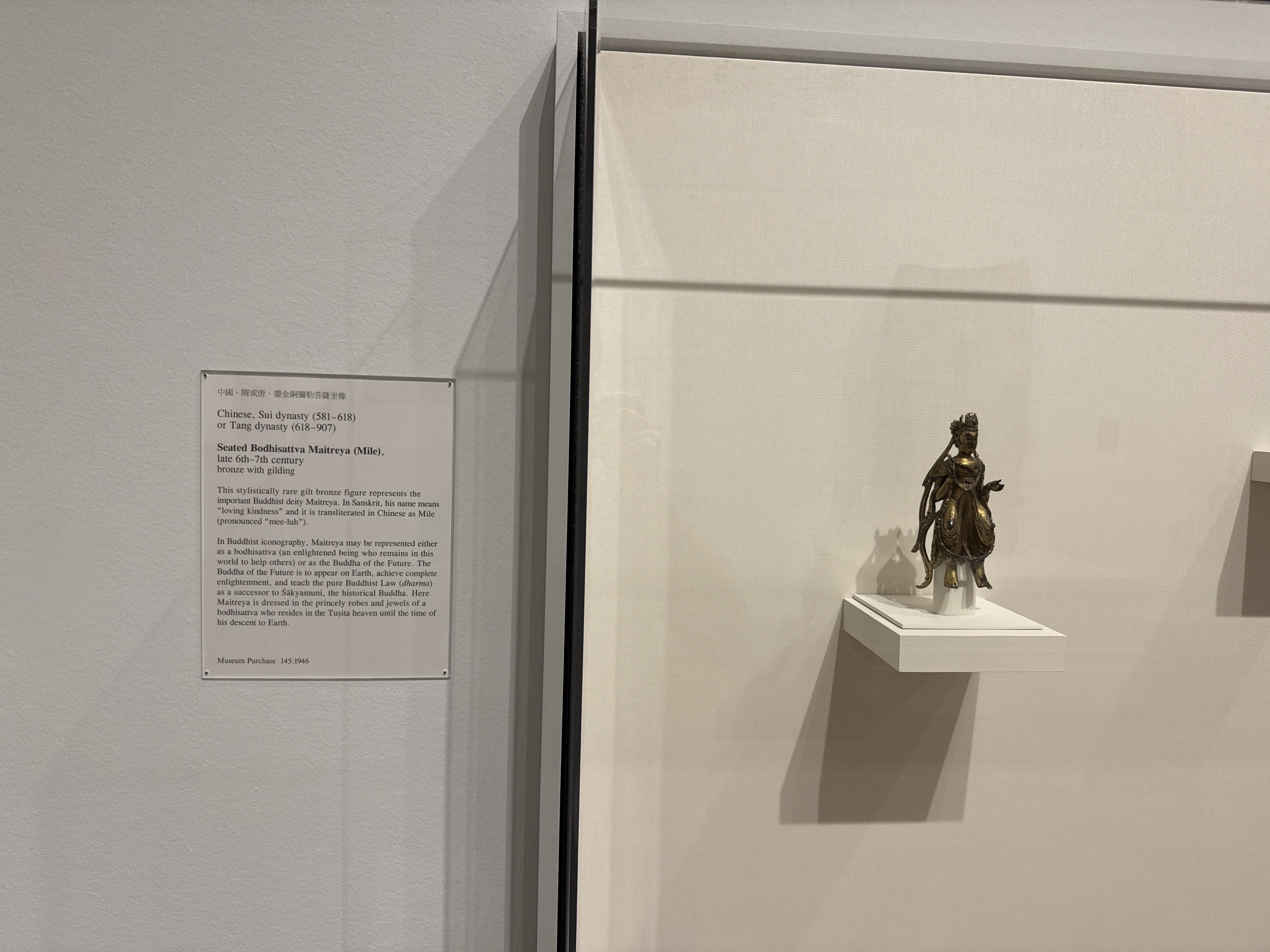
Gilt Bronze Statue of Maitreya Bodhisattva
This is a shiny gold statue of a special being from Buddhism who will come in the future to help people. It was made in China a long time ago, during the Sui or Tang dynasty.
Where is it from?
This statue comes from China. It was made during the Sui dynasty (581–618) or the Tang dynasty (618–907), around the 6th to 7th century. China is a large country in East Asia with a very long history.
What is it for?
This statue shows Maitreya Bodhisattva, a being in Buddhism who is believed to become the next Buddha in the future. People made statues like this to honor Maitreya and to pray for a better future. The statue was probably used in a temple or a shrine.
Who uses it?
Buddhist monks and followers used this statue in their religious practices. They would bow, offer flowers, and meditate in front of it. Today, people see it in a museum to learn about ancient Chinese art and Buddhism.
Tradition
Making statues of Buddha and bodhisattvas is a long tradition in Buddhism. In China, artists combined Indian Buddhist styles with their own traditions. They used bronze and covered it with gold (gilding) to make the statue look precious and holy. This tradition started over 1,500 years ago and continues today.
Other cultures with similar things
Many cultures make statues of important religious figures. For example, in Europe, Christians made statues of Jesus and saints. In India, Hindus make statues of gods like Shiva and Vishnu. In Japan, there are also many Buddhist statues. Each culture has its own style.
Connections
- Maitreya Bodhisattva
- Buddhism
- Bodhisattva
- China
- Sui and Tang Dynasties
- Chinese Buddhist Sculpture
- Bronze
- Gilding
- Lost-wax casting
- Hope and Future
Next to find
- Find another statue of a bodhisattva from a different country, like Japan or Korea.
- Look for a bronze object that is not gilded and compare how it looks.
- Find a statue of Maitreya in a different pose, like sitting with feet on the ground.
鎏金青铜弥勒菩萨像
这是一尊闪亮的金色雕像,是佛教中一位将在未来帮助人们的特殊存在。它是在很久以前的中国隋朝或唐朝制作的。
它来自哪里?
这尊雕像来自中国。它制作于隋朝(581-618年)或唐朝(618-907年),大约在6至7世纪。中国是东亚的一个大国,有着非常悠久的历史。
它有什么用途?
这尊雕像展示的是弥勒菩萨,佛教中相信将成为未来佛的存在。人们制作这样的雕像来尊崇弥勒,并为更美好的未来祈祷。这尊雕像可能曾用于寺庙或佛龛。
谁使用它?
佛教僧侣和信徒在宗教活动中使用这尊雕像。他们会在它面前鞠躬、献花和冥想。今天,人们在博物馆里看到它,以了解中国古代艺术和佛教。
传统
制作佛像和菩萨像是佛教的悠久传统。在中国,艺术家将印度佛教风格与自己的传统相结合。他们使用青铜并覆盖黄金(鎏金)使雕像看起来珍贵而神圣。这一传统始于1500多年前,并延续至今。
其他文化中的类似物品
许多文化都会制作重要宗教人物的雕像。例如,在欧洲,基督徒制作耶稣和圣徒的雕像。在印度,印度教徒制作湿婆和毗湿奴等神祇的雕像。在日本,也有许多佛教雕像。每种文化都有自己的风格。
关联
接下来寻找
- 寻找一尊来自其他国家(如日本或韩国)的菩萨雕像。
- 寻找一件未鎏金的青铜器物,比较其外观。
- 寻找一尊不同姿态的弥勒像,比如双脚着地坐姿。