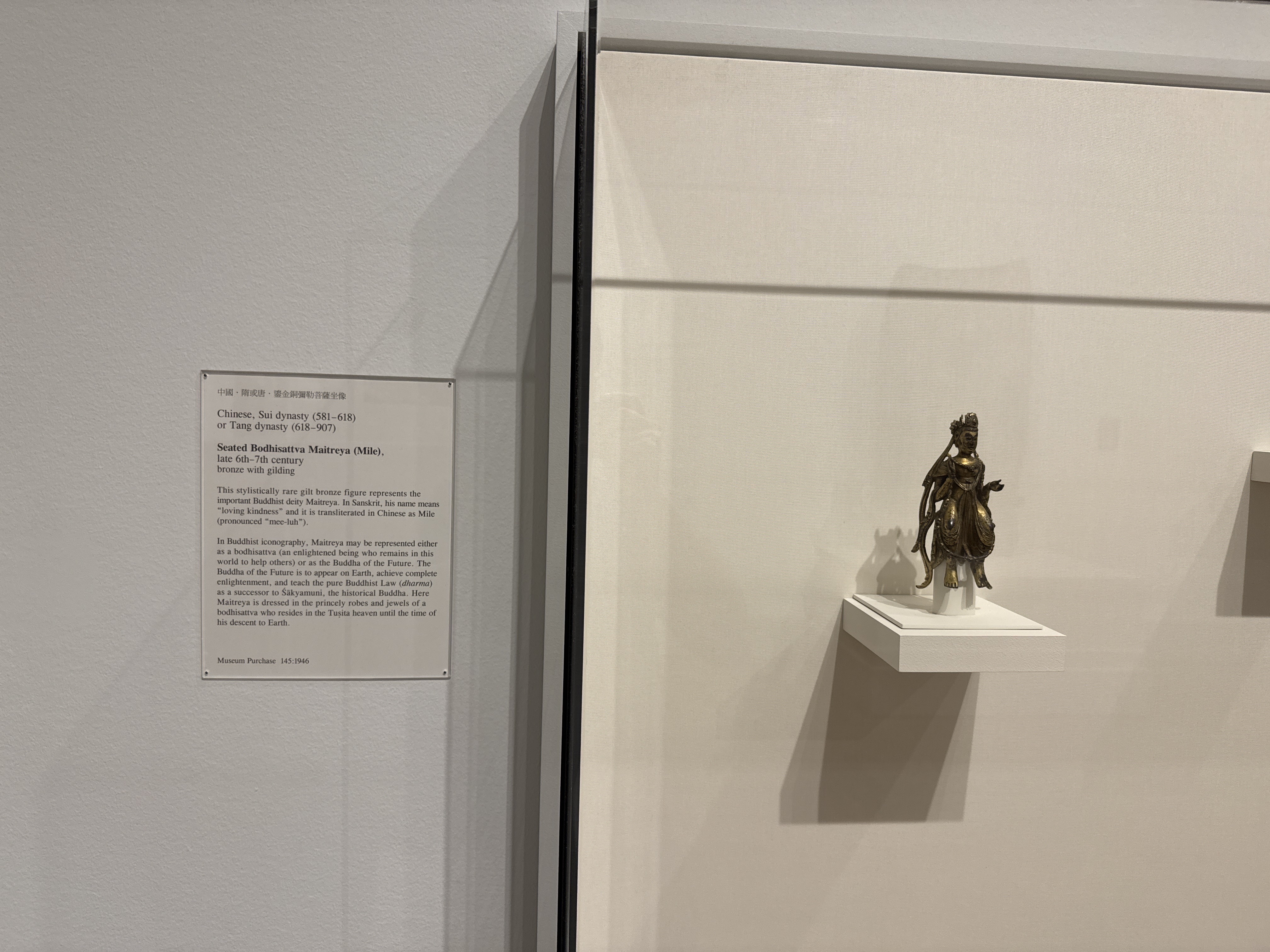
Gilt Bronze Maitreya Bodhisattva
This is a gilt bronze statue of Maitreya Bodhisattva, a future Buddha in Buddhism. It was made in China during the Sui or Tang dynasty, about 1,400 years ago. The statue is covered with a thin layer of gold, making it shine.
What is it?
This is a statue of Maitreya Bodhisattva, made of bronze and covered with gold (gilt). Maitreya is a special being in Buddhism who will become the next Buddha in the future. The statue was made in China during the Sui dynasty (581–618) or Tang dynasty (618–907), around the 6th or 7th century. It is a beautiful example of Chinese Buddhist sculpture.
Who used it?
Buddhist monks and believers used statues like this in temples for worship. They would pray to Maitreya for hope and a better future. The statue might have been placed on an altar in a temple.
When and where?
This statue was made in China, during the Sui or Tang dynasty, about 1,400 years ago. The Sui dynasty reunited China, and the Tang dynasty was a golden age of culture and trade. Buddhism was very popular at that time.
What does it tell us?
This statue tells us that people in ancient China believed in a future savior who would bring peace. It also shows the high skill of Chinese artists, who could cast bronze and cover it with gold. The statue's calm expression and elegant posture show the artistic style of the time.
Compared to today
Today, people still make statues of Maitreya, but they are often made of different materials like wood or stone. This ancient statue is special because it is made of bronze and gold, which were expensive and precious.
Connections
- Buddhism
- Bodhisattva
- Maitreya Bodhisattva
- Maitreya
- Chinese Buddhist Sculpture
- Sui and Tang Dynasties
- China
- Bronze
- Gilding
- Lost-wax casting
- Hope and Future
Next to find
- Look for another statue of a bodhisattva in a museum. How is it similar or different?
- Find a bronze object from another culture, like ancient Greece or Rome. Compare the metalworking.
- Search for other objects that use gilding. What do they have in common?
鎏金青铜弥勒菩萨像
这是一尊鎏金青铜弥勒菩萨像,是佛教中的未来佛。它是在中国隋朝或唐朝时期制作的,大约有1400年历史。雕像表面覆盖着一层薄薄的黄金,闪闪发光。
这是什么?
这是一尊弥勒菩萨像,由青铜制成,表面鎏金。弥勒是佛教中的一位特殊存在,将在未来成为下一尊佛。这尊雕像制作于中国隋朝(581-618年)或唐朝(618-907年),大约在6至7世纪。它是中国佛教雕塑的美丽典范。
谁使用它?
佛教僧侣和信徒在寺庙中使用这样的雕像进行礼拜。他们向弥勒祈祷,祈求希望和更美好的未来。这尊雕像可能曾被放置在寺庙的祭坛上。
何时何地?
这尊雕像制作于中国,隋朝或唐朝时期,大约1400年前。隋朝统一了中国,唐朝是文化和贸易的黄金时代。那时佛教非常流行。
它告诉我们什么?
这尊雕像告诉我们,古代中国人相信一位未来救世主会带来和平。它也展示了中国艺术家高超的技艺,他们能够铸造青铜并鎏金。雕像平静的表情和优雅的姿态展现了当时的艺术风格。
与今天相比
今天,人们仍然制作弥勒像,但通常使用不同的材料,如木头或石头。这尊古代雕像很特别,因为它由青铜和黄金制成,这些材料昂贵而珍贵。
关联
接下来寻找
- 在博物馆里寻找另一尊菩萨像。它有什么相似或不同?
- 找一件来自其他文化(如古希腊或罗马)的青铜物品。比较金属工艺。
- 寻找其他使用鎏金的物品。它们有什么共同点?