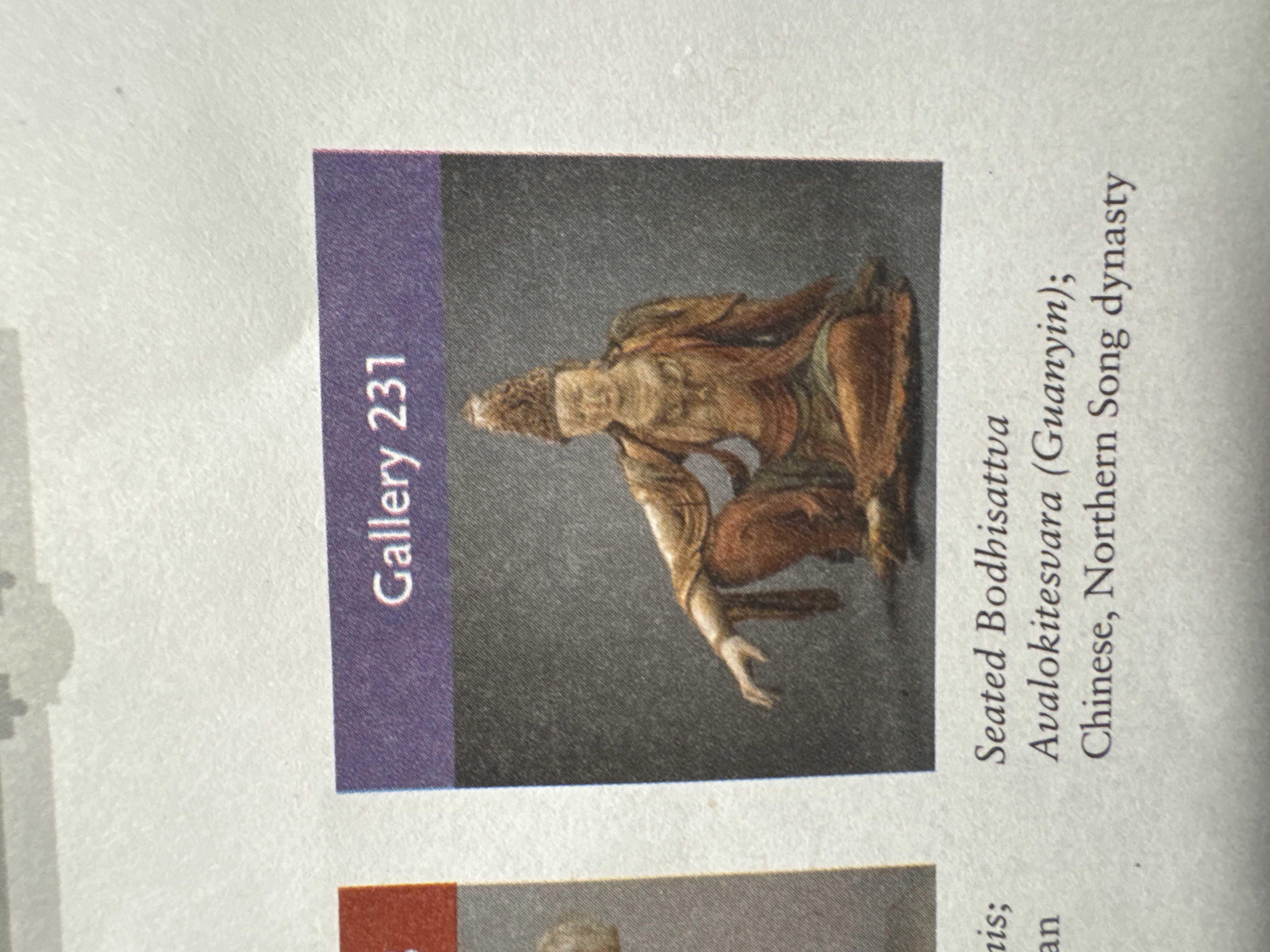
Seated Guanyin Bodhisattva
This is a wooden statue of Guanyin, a Buddhist goddess of compassion, made during the Song Dynasty in China. She sits calmly, showing care for all living things.
What is it?
This is a carved wood statue of Guanyin Bodhisattva, also known as Avalokiteshvara. In Buddhism, a bodhisattva is someone who has reached enlightenment but chooses to stay in the world to help others. Guanyin is the bodhisattva of compassion. She is often shown as a female figure, symbolizing endless kindness and wisdom. This statue was made during the Northern Song Dynasty (960-1127), a time when Buddhist art in China became very elegant and refined.
Who used it?
This statue was used by Buddhist monks and believers in temples. People prayed to Guanyin for protection, help, and blessings. The statue was a focus for meditation and worship. It reminded people of Guanyin's compassion and her promise to hear the cries of the world.
When and where?
This statue was made in China during the Northern Song Dynasty, around the year 1000. The Song Dynasty was a golden age of culture and art. The capital was Kaifeng. Many Buddhist temples were built, and they housed beautiful sculptures like this one.
What does it tell us?
This statue tells us that people in the Song Dynasty had strong faith in Buddhism. They believed that Guanyin could help them. The statue also shows the skill of Song artists. They carved the wood to create a graceful pose and detailed clothing. The calm expression on Guanyin's face shows her compassion and peace.
Compared to today
Today, we might have photos or digital images of people we admire. Long ago, people made statues like this to feel close to their spiritual guides. We still have statues of heroes and leaders, but for different reasons.
Connections
Next to find
- A bronze statue from the same period
- A painting of Guanyin from a different dynasty
- A statue of a different bodhisattva, like Manjushri
- A Song Dynasty ceramic piece
坐姿观音菩萨像
这是一尊中国宋朝时期制作的观音木雕像,观音是佛教中慈悲的女神。她安详地坐着,显示对众生的关怀。
这是什么?
这是一尊木雕观音菩萨像,也称观世音。在佛教中,菩萨是已经觉悟但选择留在世间帮助他人的人。观音是慈悲的菩萨。她常被描绘为女性形象,象征无尽的慈悲和智慧。这尊雕像制作于北宋时期(960-1127年),那时中国的佛教艺术变得非常优雅和精致。
谁使用它?
这尊雕像被寺庙中的僧侣和信徒使用。人们向观音祈祷,寻求保护、帮助和祝福。雕像是冥想和礼拜的焦点。它提醒人们观音的慈悲和她倾听世间哭声的承诺。
何时何地?
这尊雕像制作于中国北宋时期,大约公元1000年。宋朝是文化和艺术的黄金时代。首都是开封。许多佛教寺庙被建造,里面供奉着像这样美丽的雕塑。
它告诉我们什么?
这尊雕像告诉我们,宋朝的人们对佛教有坚定的信仰。他们相信观音能帮助他们。雕像也展示了宋代艺术家的技艺。他们雕刻木头,创造出优雅的姿态和细致的衣饰。观音脸上平静的表情显示她的慈悲与安宁。
与今天相比
今天,我们可能有照片或数字图像来纪念我们敬佩的人。很久以前,人们制作这样的雕像来感觉接近他们的精神导师。我们仍然有英雄和领袖的雕像,但出于不同的原因。
关联
下次寻找
- 同一时期的青铜雕像
- 不同朝代绘制的观音画
- 其他菩萨像,比如文殊菩萨
- 一件宋代陶瓷