Shabti
A small statue placed in ancient Egyptian tombs to work for the dead person in the afterlife.
What is it?
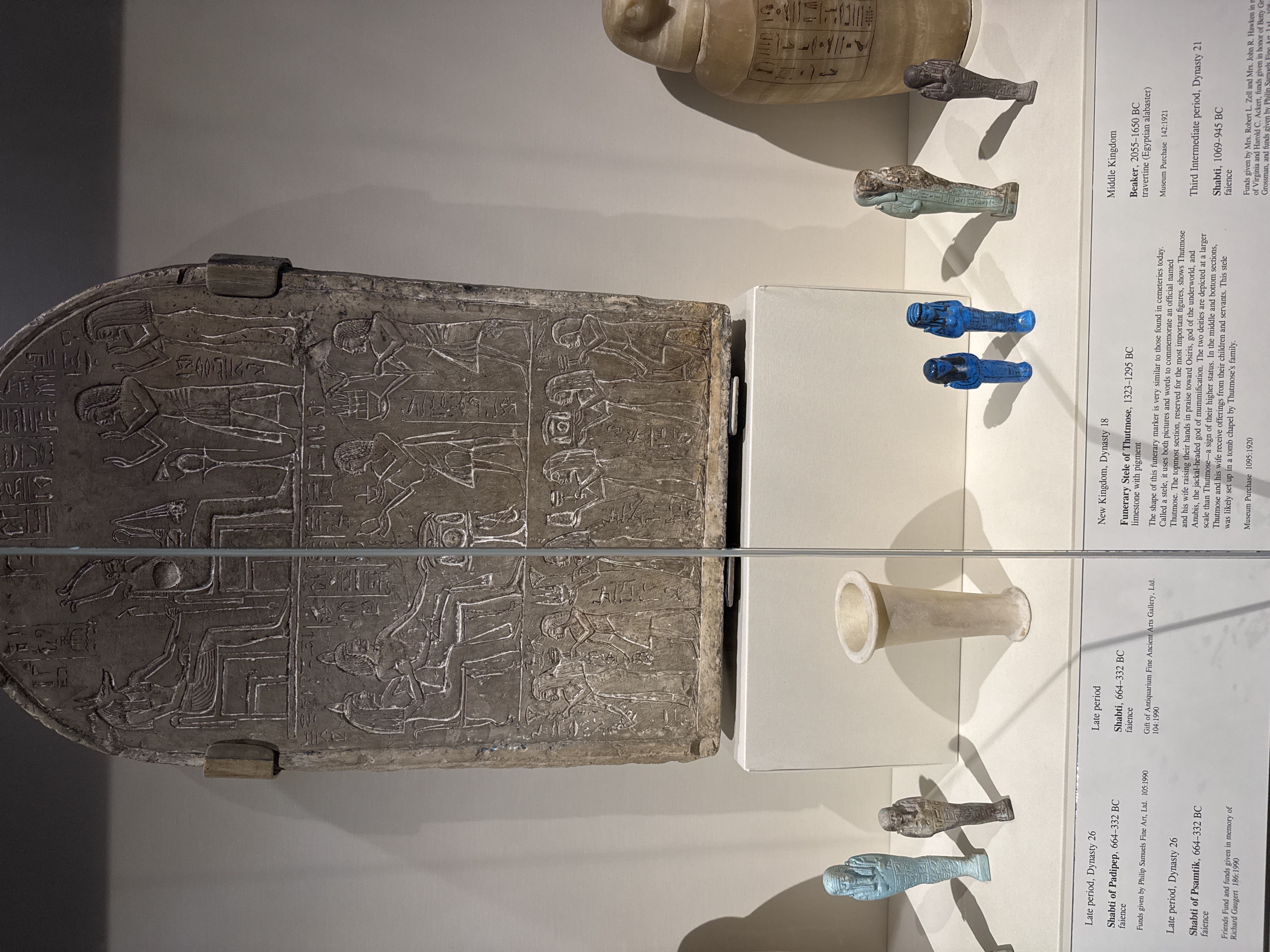
A shabti (also called ushabti) is a figurine made of ceramic, wood, or stone. It was buried with the deceased to perform any labor required in the afterlife. The word "shabti" means "answerer" — the statue would answer when called to work. Shabtis often hold tools like hoes and baskets. They can be painted blue or green to symbolize the Nile's life-giving water. The ones you captured are ceramic, some with blue or green paint.
Why it matters
Shabtis show how seriously the Egyptians took the afterlife. They believed the next world would have farming and chores, so they provided helpers. Shabtis are common in museums and help us understand Egyptian beliefs.
Where you've seen it
This list grows as you capture more shabti figures.