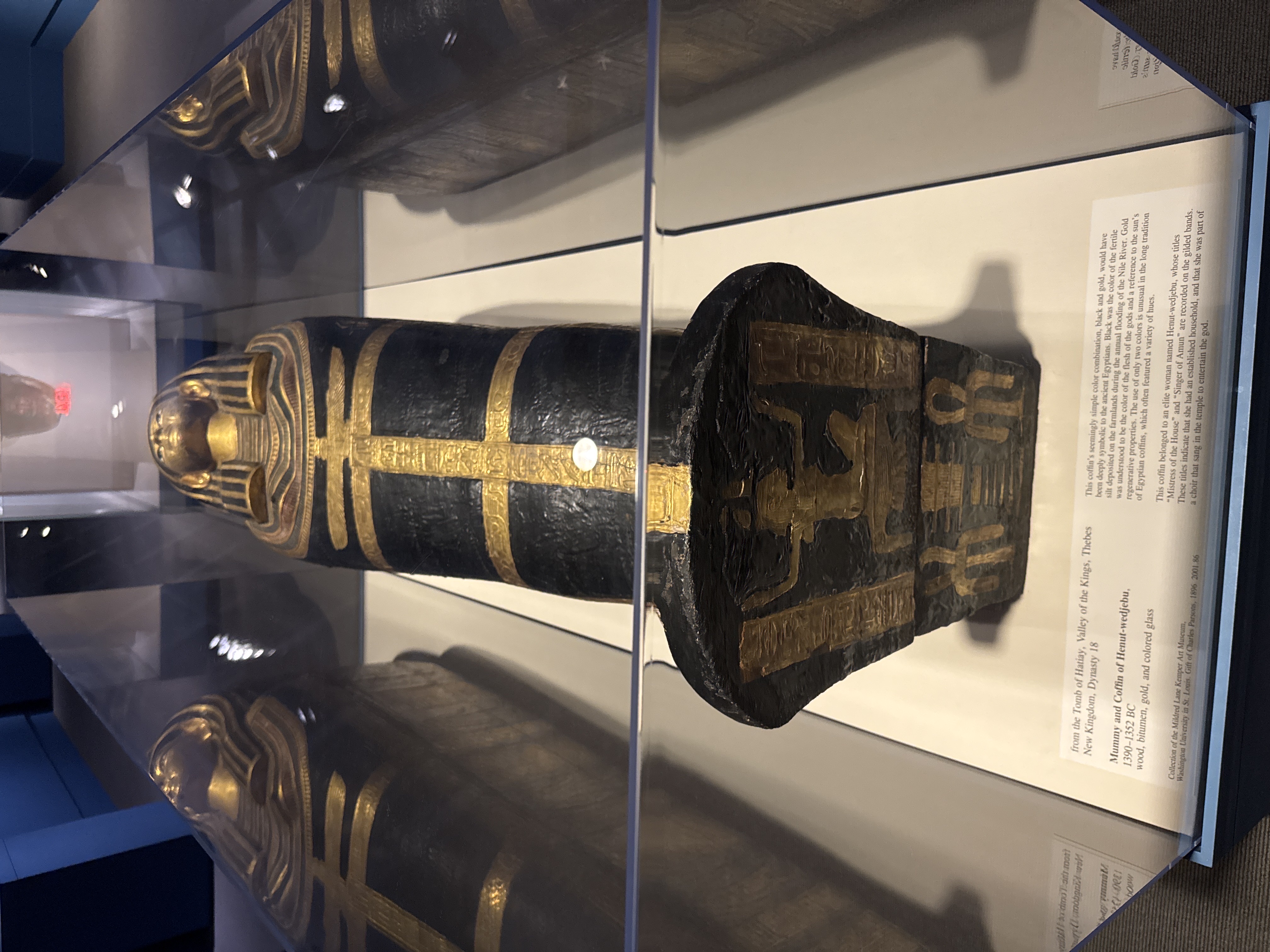
Henut-wedjebu
An ancient Egyptian noblewoman who sang in temples during the New Kingdom.
What is it?
Henut-wedjebu was a woman who lived around 1390–1352 BCE. She had the titles "Singer of Horus" and "Singer of Amun." This means she performed music in the temples for religious ceremonies. Her coffin shows she was wealthy and important. She was buried in the Valley of the Kings. The coffin is painted black and gold, with decorations that symbolize rebirth and the gods.
Why it matters
Henut-wedjebu's coffin gives us a glimpse into the life of a non-royal person in ancient Egypt. It shows that women could hold important religious roles. The elaborate coffin also shows the importance of the afterlife in Egyptian culture.
Where you've seen it
This list grows as you capture more exhibits related to Henut-wedjebu.