Nataraja
A form of the Hindu god Shiva as the cosmic dancer, who dances the universe into existence and destruction.
What is it?
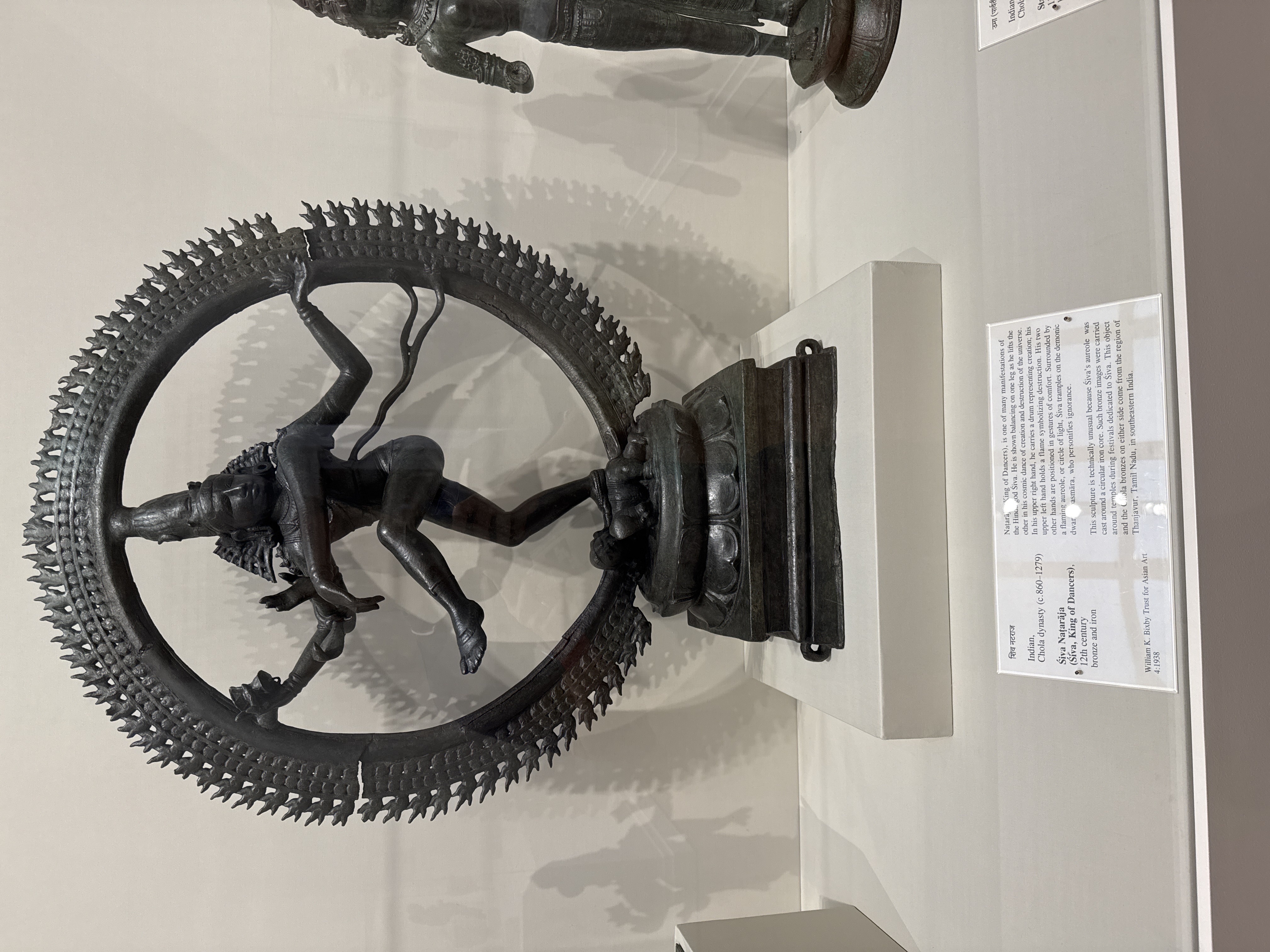
Nataraja is a famous depiction of Shiva, one of the main gods in Hinduism. He is shown dancing inside a ring of fire, which represents the cycle of life and death. He has four arms: one holds a drum (symbolizing creation), one holds a flame (symbolizing destruction), one is raised in a gesture of blessing, and one points to his raised foot (symbolizing salvation). He stands on a demon, representing ignorance. The Nataraja statue you captured is a classic example of this form. The statue is made of bronze and iron, and was created in the 12th century during the Chola dynasty.
Why it matters
Nataraja is one of the most iconic images in Indian art. It combines art, religion, and philosophy in a single sculpture. Understanding Nataraja helps you understand Hindu beliefs about the universe.
Where you've seen it
This list grows as you capture more exhibits of Nataraja.
Related
舞王
印度教湿婆神作为宇宙舞者的一种形式,他通过舞蹈创造和毁灭宇宙。
这是什么?
舞王是湿婆的著名形象,湿婆是印度教主要神祇之一。他展示在火环中跳舞,火环代表生死循环。他有四只手臂:一只手持手鼓(象征创造),一只手持火焰(象征毁灭),一只举起作祝福手势,一只指向抬起的脚(象征解脱)。他站在一个代表无知的魔鬼身上。你捕捉的舞王雕像就是这种形式的经典例子。雕像由青铜和铁制成,制作于12世纪的朱罗王朝。
为什么重要
舞王是印度艺术中最具标志性的形象之一。它将艺术、宗教和哲学融合在一尊雕塑中。了解舞王有助于你理解印度教关于宇宙的信仰。
你在哪里见过它
当你捕捉更多舞王展品时,这个列表会增长。