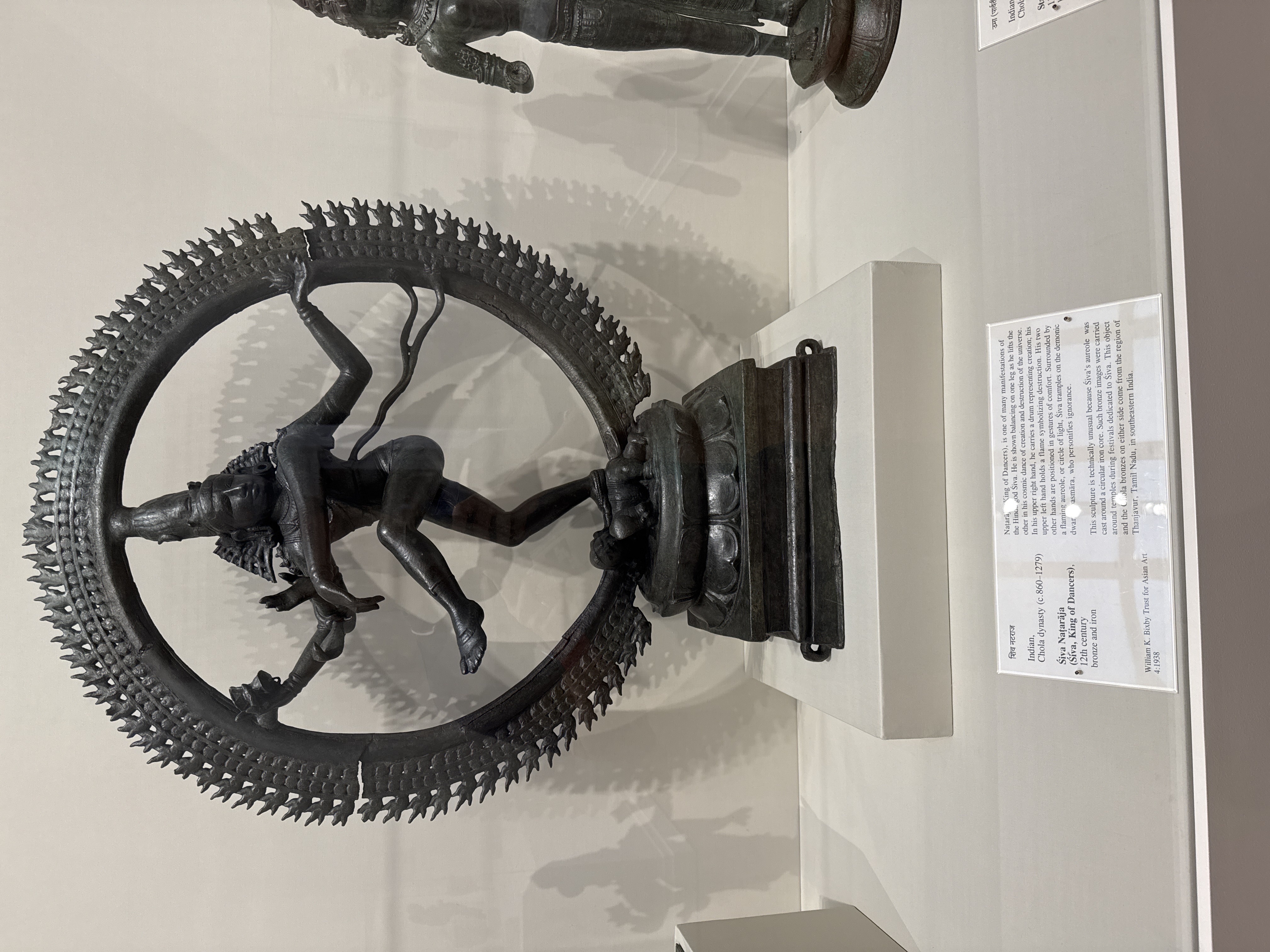
Nataraja: Shiva as Lord of the Dance
This bronze statue shows the Hindu god Shiva as Nataraja, the cosmic dancer. He has four arms and dances inside a ring of fire, representing the cycle of creation and destruction.
What is it?
This is a bronze sculpture of Shiva as Nataraja (Lord of the Dance). It was made in the 12th century in Tamil Nadu, India, during the Chola dynasty. The statue is made of bronze and iron. Shiva is shown with four arms, holding a flame and a drum. He raises one foot, symbolizing salvation, and stands on a demon representing ignorance. A ring of fire surrounds him, representing the eternal cycle of the universe.
Who used it?
This statue was used by Hindus in South India for worship and meditation. It was placed in temples and used in religious ceremonies. The Chola kings were great patrons of art and built many temples where such statues were displayed.
When and where?
It was made around 1150 CE in Tamil Nadu, a state in southeastern India. This was during the Chola dynasty, which ruled from about 300 BCE to 1279 CE. The Chola period is famous for its bronze sculptures and temple architecture.
What does it tell us?
The statue tells us about Hindu beliefs. Shiva's dance creates, preserves, and destroys the universe. The drum symbolizes creation, the flame symbolizes destruction, and the raised foot offers salvation. It shows that the Chola people were skilled metalworkers and deeply religious.
Compared to today
Today, we might use machines to make metal objects, but the Chola artists made this statue by hand using lost-wax casting. It is amazing that such a detailed sculpture was made over 800 years ago.
Connections
Next to find
- Find another Chola bronze statue in a museum.
- Look for a sculpture with a ring of fire from another culture.
- Learn about lost-wax casting and try a simple craft.
舞王:湿婆的宇宙之舞
这尊青铜雕像展示了印度教湿婆神作为舞王,宇宙的舞者。他有四只手臂,在一个火环里跳舞,代表创造和毁灭的循环。
这是什么?
这是一尊湿婆作为舞王(Nataraja)的青铜雕塑。它制作于12世纪,印度泰米尔纳德邦,朱罗王朝时期。雕像由青铜和铁制成。湿婆有四只手臂,手持火焰和手鼓。他抬起一只脚,象征解脱,站在一个代表无知的魔鬼身上。一个火环环绕着他,代表宇宙的永恒循环。
谁使用它?
这尊雕像被南印度的印度教徒用于礼拜和冥想。它被放置在寺庙中,用于宗教仪式。朱罗国王是艺术的伟大赞助人,建造了许多寺庙,展示这样的雕像。
何时何地?
它制作于公元1150年左右,在印度东南部的泰米尔纳德邦。这发生在朱罗王朝时期,该王朝从约公元前300年统治到公元1279年。朱罗时期以青铜雕塑和寺庙建筑闻名。
它告诉我们什么?
雕像告诉我们印度教的信仰。湿婆的舞蹈创造、维持和毁灭宇宙。手鼓象征创造,火焰象征毁灭,抬起的脚提供解脱。它表明朱罗人是熟练的金属工匠,并且非常虔诚。
与今天相比
今天,我们可能用机器制造金属物品,但朱罗艺术家用手工使用失蜡法制作了这尊雕像。令人惊叹的是,如此精细的雕塑是在800多年前制作的。
关联
下次寻找
- 在博物馆中找到另一尊朱罗青铜雕像。
- 寻找来自其他文化的带有火环的雕塑。
- 了解失蜡法并尝试一个简单的手工。