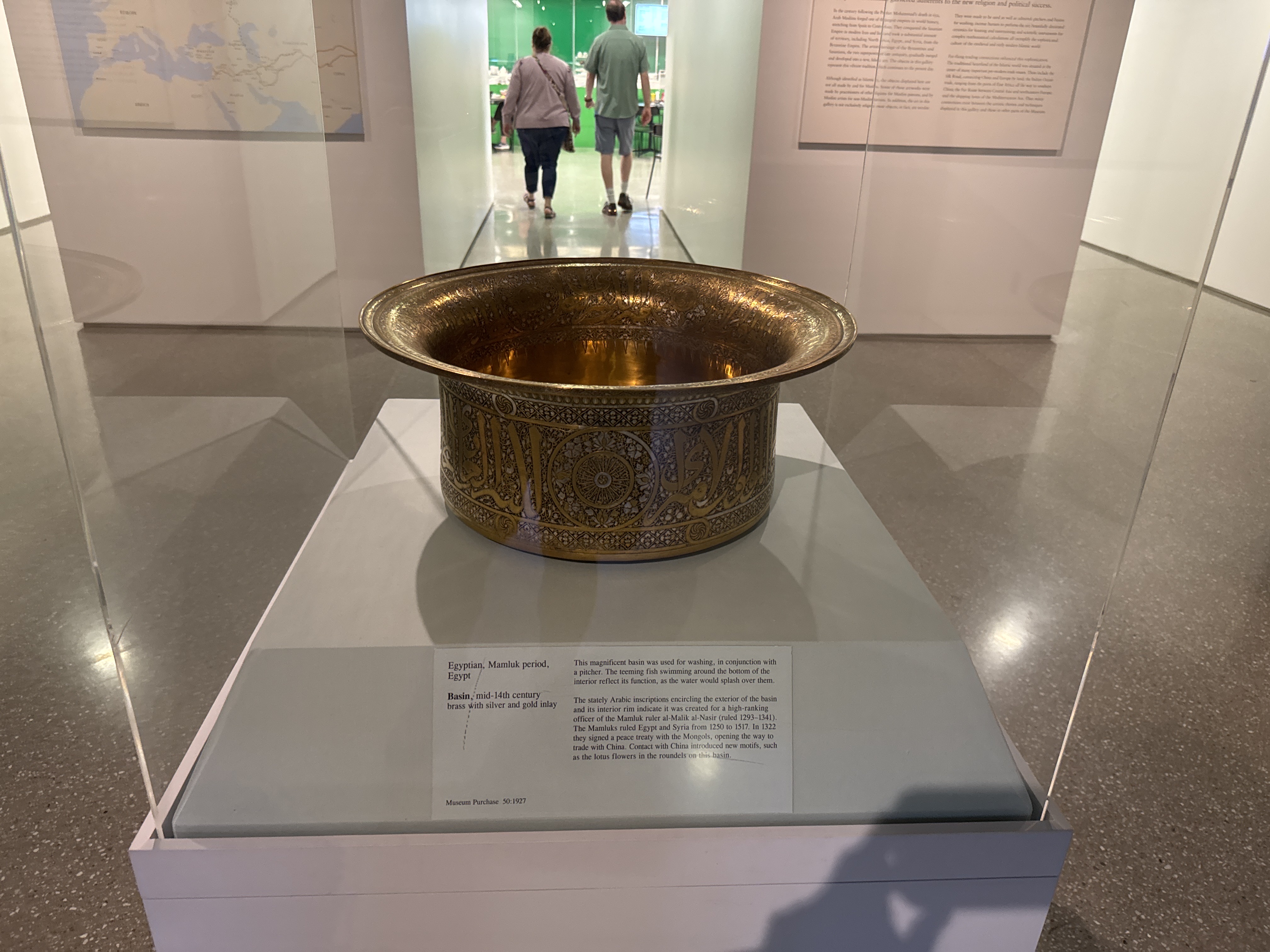
Mamluk Brass Washbasin
This is a brass washbasin from the Mamluk period in Egypt, used for washing hands before meals or prayers. It is decorated with silver and gold inlay.
What is it?
This is a washbasin made of brass, a yellow metal. It was made in the 1300s, during the Mamluk period. The surface is decorated with silver and gold, hammered into grooves carved in the brass. This technique is called metal inlay. The patterns include geometric shapes and plant designs, which are common in Islamic art.
Who used it?
People in the Mamluk Sultanate used this washbasin for washing hands. It was probably used before meals or before prayers. Washing hands was a ritual to show respect and cleanliness. The basin might have been used in a palace or a wealthy home.
When and where?
It was made around 1350 in Egypt or Syria, which were part of the Mamluk Sultanate. The Mamluks ruled from 1250 to 1517. Their capital was Cairo, a big city with many artists and craftspeople.
What does it tell us?
This washbasin tells us that the Mamluks valued art and luxury. They had skilled metalworkers who could create beautiful objects. It also shows that cleanliness and ritual were important in their culture. The use of gold and silver shows that even everyday objects could be works of art.
Compared to today
Today, we wash our hands in sinks with running water. But we still wash before eating and after using the bathroom. In some cultures, hand-washing before prayer is still practiced. Our sinks are usually plain, but this washbasin was decorated like a piece of jewelry.
Connections
Next to find
- A brass object from another civilization, like China or Europe.
- An object used for hand-washing in a different culture.
- A piece of Islamic art with calligraphy instead of patterns.
马穆鲁克黄铜洗手盆
这是一个来自埃及马穆鲁克时期的黄铜洗手盆,用于饭前或祈祷前洗手。它用银和金镶嵌装饰。
它是什么?
这是一个用黄铜(一种黄色金属)制成的洗手盆。它制作于14世纪,马穆鲁克时期。表面用银和金装饰,这些金属被锤入黄铜上刻出的凹槽中。这种技术称为金属镶嵌。图案包括几何形状和植物纹样,这在伊斯兰艺术中很常见。
谁使用它?
马穆鲁克苏丹国的人们用这个洗手盆洗手。它可能用于饭前或祈祷前。洗手是一种表示尊重和洁净的仪式。这个盆可能曾在宫殿或富裕家庭中使用。
何时何地?
它制作于约1350年,在埃及或叙利亚,这些地方当时属于马穆鲁克苏丹国。马穆鲁克人从1250年到1517年统治该地区。他们的首都是开罗,一个拥有许多艺术家和工匠的大城市。
它告诉我们什么?
这个洗手盆告诉我们马穆鲁克人重视艺术和奢华。他们有技艺精湛的金属工匠,能制作出美丽的物品。它还表明洁净和仪式在他们的文化中很重要。使用金和银表明即使是日常用品也可以成为艺术品。
与今天相比
今天,我们在水槽中用流动的水洗手。但我们仍然在饭前和如厕后洗手。在一些文化中,祈祷前洗手仍然被实践。我们的水槽通常是朴素的,但这个洗手盆装饰得像一件珠宝。
联系
下一步寻找
- 来自其他文明(如中国或欧洲)的黄铜物品。
- 另一种文化中用于洗手的物品。
- 带有书法而非图案的伊斯兰艺术品。