Allegory
A story or picture that has a hidden meaning, usually a moral or lesson.
What is it?
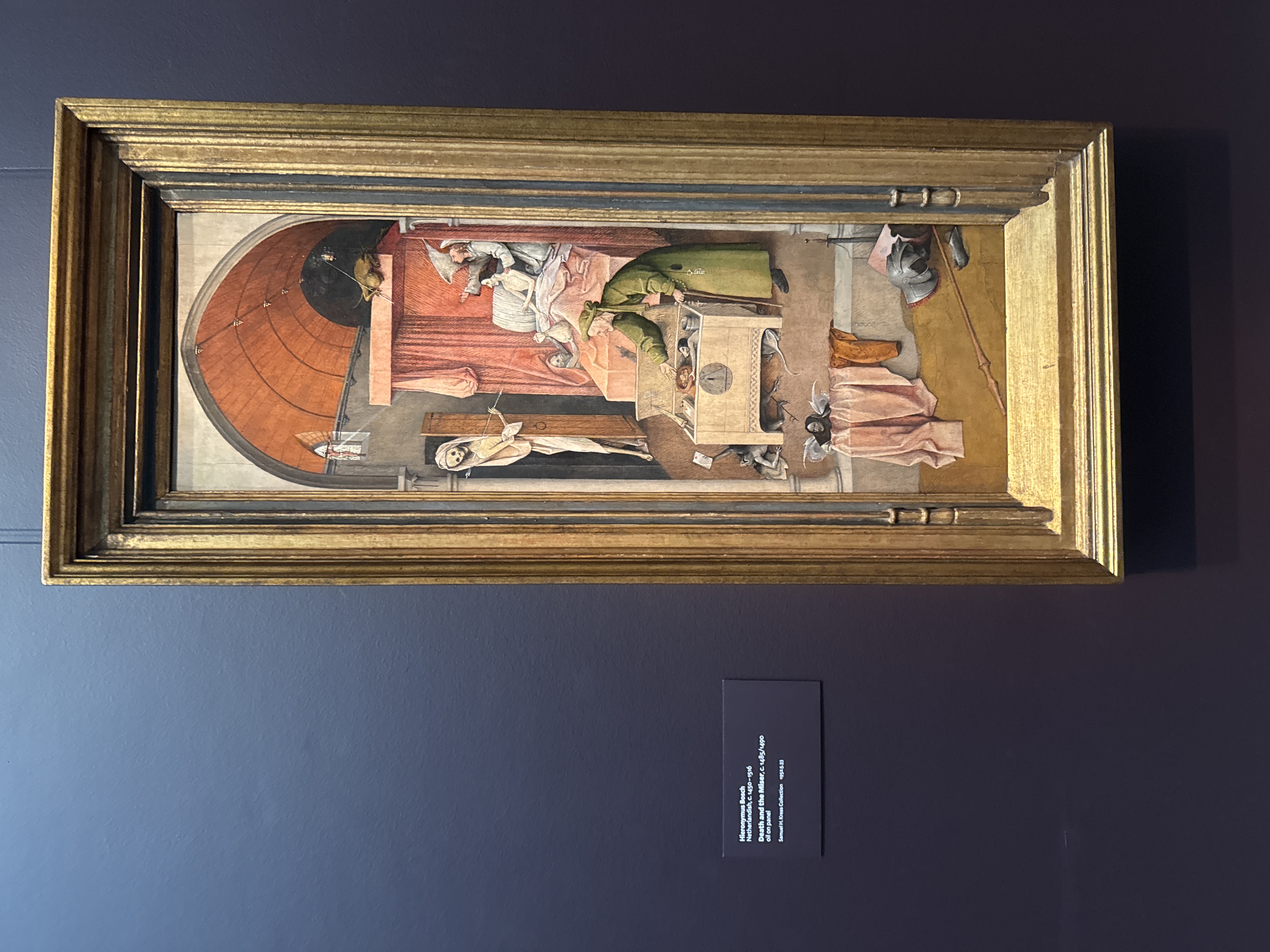
An allegory is when an artist uses symbols to tell a deeper story. For example, a skeleton might stand for death, or a candle might stand for life. The whole painting "Death and the Miller" is an allegory: it shows a dying man and Death, but it really means that life is short and we should be ready. Many medieval and Renaissance paintings are allegories. They teach lessons about how to live. "The Judgment of Paris" can be seen as an allegory about choice and its consequences: Paris's choice of Aphrodite leads to war.
Why it matters
Allegories make art more interesting. Instead of just showing what you see, they make you think. They are like puzzles that you solve by looking at the symbols.
Where you've seen it
This list grows as you capture more allegorical artworks.
Related
寓言
一个有隐藏意义的故事或图画,通常是道德或教训。
这是什么?
寓言是艺术家使用符号讲述更深层故事的方式。例如,骷髅可能代表死亡,蜡烛可能代表生命。整幅画《死亡与磨坊主》是一个寓言:它展示了一个垂死的人和死神,但真正的意思是生命短暂,我们应该做好准备。许多中世纪和文艺复兴时期的画作都是寓言。它们教导如何生活的道理。《帕里斯的审判》可以被看作是关于选择及其后果的寓言:帕里斯选择阿佛洛狄忒导致了战争。
为什么重要
寓言使艺术更有趣。它们不只是展示你看到的,而是让你思考。它们就像通过看符号来解决的谜题。
你在哪里见过它
当你捕捉到更多寓言艺术品时,这个列表会增长。