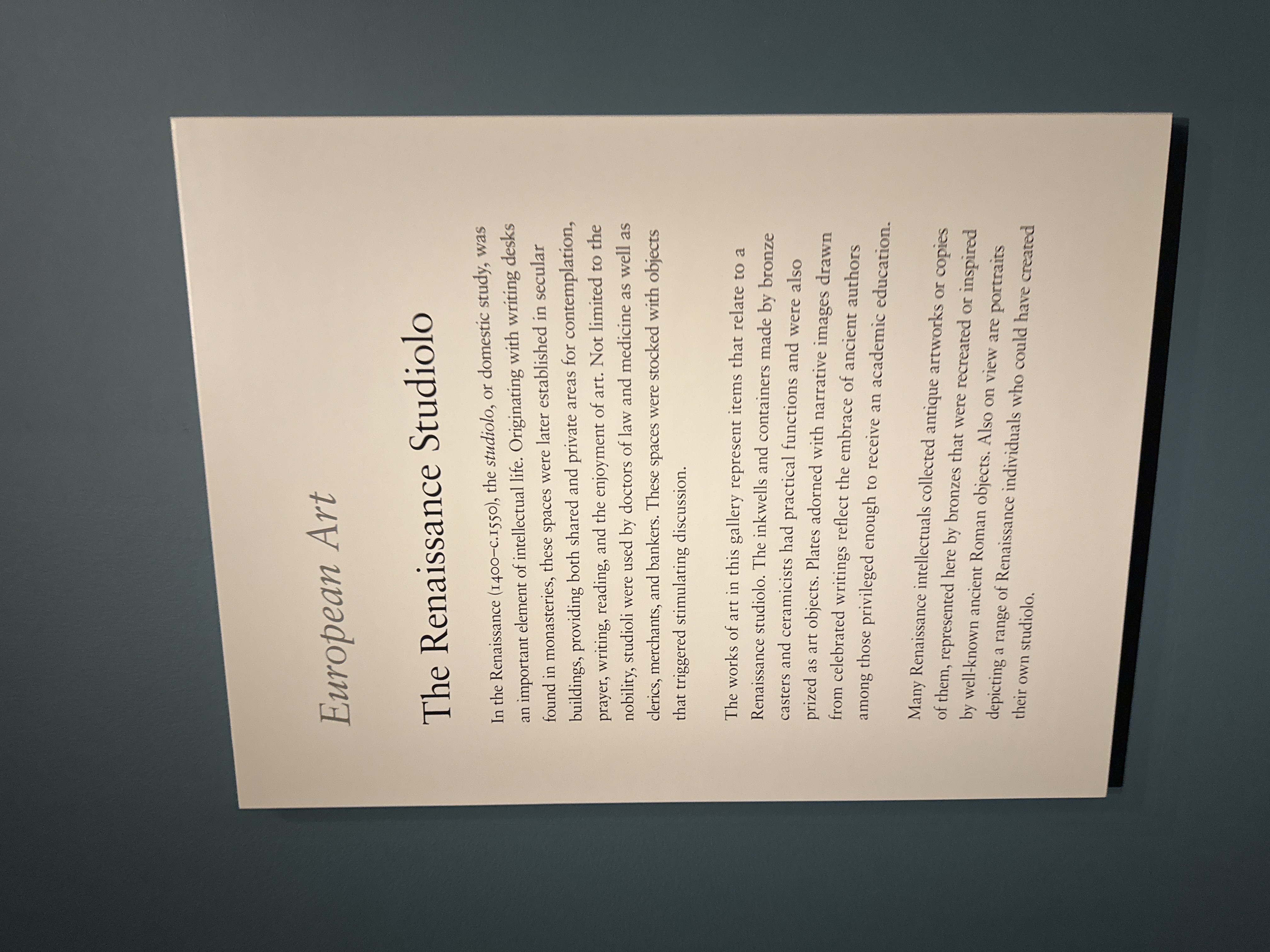
Studiolo Exhibition
A small private study room in Renaissance Italy, used for reading, writing, and thinking. This exhibition shows what a studiolo looked like and what objects it contained.
Where is it from?
The studiolo originated in Italy during the Renaissance, around the 1400s to 1500s. It was a private room in a palace or house, often decorated with art and filled with books and objects.
What is it for?
The studiolo was a place for one person to work alone, meditate, read, write, or enjoy their collection of art and curiosities. It was like a personal museum and library combined.
Who uses it?
Studioli were used by nobles, scholars, wealthy merchants, lawyers, doctors, and clergy. These people valued learning and wanted a quiet space to think.
Tradition
The studiolo tradition began in monasteries, where monks had small cells for reading and prayer. During the Renaissance, this idea spread to homes of wealthy people. The room often contained portraits of thinkers, ancient sculptures, and beautiful objects.
Other cultures with similar things
Many cultures have had private study rooms. In ancient China, scholars had studies with calligraphy and paintings. In the Islamic world, libraries and study rooms were common in palaces.
Connections
Next to find
- Find a portrait of a Renaissance scholar or thinker.
- Look for an inkwell or writing tool from the Renaissance.
- Find an object made of bronze or terracotta in a museum.
- Visit a room that feels like a quiet study and compare it to a studiolo.
工作间展览
意大利文艺复兴时期的小型私人书房,用于阅读、写作和思考。这个展览展示了工作间的样子以及里面摆放的物品。
它来自哪里?
工作间起源于文艺复兴时期的意大利,大约在15到16世纪。它是宫殿或住宅中的私人房间,通常用艺术品装饰,并装满书籍和物品。
它用来做什么?
工作间是一个人可以独自工作、冥想、阅读、写作或欣赏自己的艺术和珍品收藏的地方。它就像是个人博物馆和图书馆的结合体。
谁使用它?
工作间被贵族、学者、富商、律师、医生和神职人员使用。这些人重视学习,需要一个安静的空间来思考。
传统
工作间的传统始于修道院,僧侣们有用于阅读和祈祷的小房间。在文艺复兴时期,这个想法传播到了富人的家中。房间里通常摆放着思想家的肖像、古代雕塑和美丽的物品。
其他有类似物品的文化
许多文化都有私人书房。在古代中国,学者有摆放书法和绘画的书房。在伊斯兰世界,宫殿中常见图书馆和书房。
关联
下次寻找
- 找一幅文艺复兴时期学者或思想家的肖像。
- 寻找文艺复兴时期的墨水瓶或书写工具。
- 在博物馆里找一件青铜或陶土制成的物品。
- 参观一个感觉像安静书房的房间,并与工作间比较。