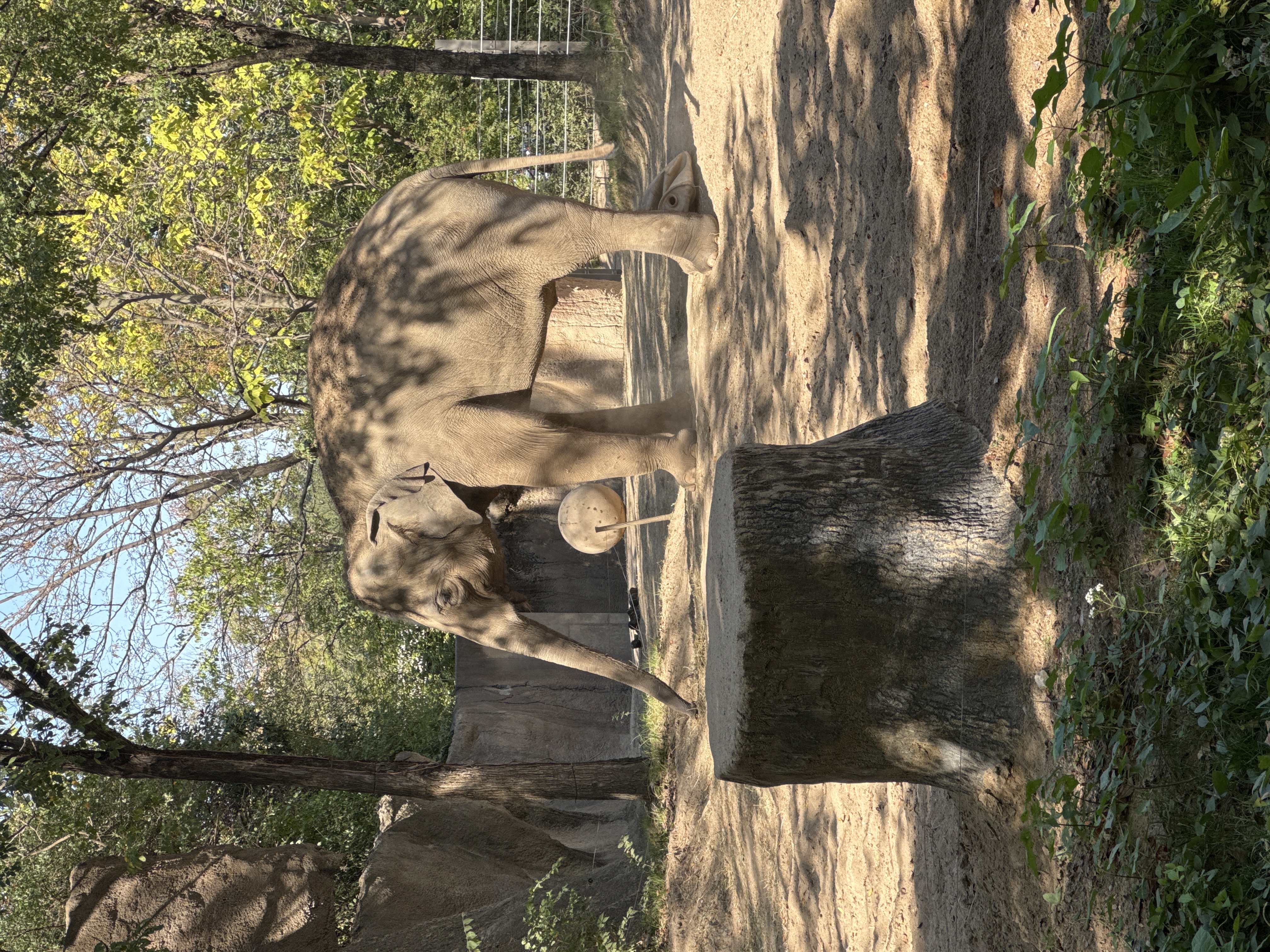
Elephant
Elephants are the largest land animals on Earth. They are highly intelligent, live in close families, and are important in many cultures.
Where is it from?
Elephants come from two parts of the world: Africa and Asia. African elephants live in the savannas and forests of sub-Saharan Africa. Asian elephants live in the forests and grasslands of South and Southeast Asia. You learned that African elephants have larger ears shaped like Africa, while Asian elephants have smaller, rounder ears.
What is it for?
In nature, elephants are not "for" anything—they just live their lives. But they play a huge role in their ecosystems. They spread seeds, create water holes, and clear paths in the forest. In human culture, elephants are used in ceremonies, as symbols, and in tourism. You learned that in some cultures, elephants symbolize strength, wisdom, and good luck.
Who uses it?
Elephants themselves use their trunks for breathing, eating, drinking, and communicating. People use elephants for work, transport, and religious festivals. In Hinduism, the god Ganesha has an elephant head and represents wisdom and prosperity. You learned that Ganesha is one of the most popular Hindu gods.
Tradition
Elephants have been part of human traditions for thousands of years. In India, they are decorated and paraded during festivals. In Thailand, they are national symbols. In Africa, they appear in folklore and art. You learned that elephants are highly intelligent and can show complex emotions, which is why they are respected in many cultures.
Other cultures with similar things
Many cultures have animals that symbolize wisdom and strength. For example, the lion in African cultures, the dragon in Chinese culture, and the eagle in Native American cultures. But the elephant is unique because of its size, intelligence, and gentle nature.
Connections
Next to find
- Find a statue or painting of Ganesha in a museum.
- Look for elephant footprints or dung in a zoo or wildlife park.
- Compare the size of an African elephant ear to an Asian elephant ear.
- Learn about one conservation project that helps protect elephants.
大象
大象是地球上最大的陆地动物。它们非常聪明,生活在亲密的家庭中,在许多文化中都很重要。
它来自哪里?
大象来自世界的两个地方:非洲和亚洲。非洲象生活在撒哈拉以南非洲的稀树草原和森林中。亚洲象生活在南亚和东南亚的森林和草原上。你了解到非洲象的耳朵更大,形状像非洲,而亚洲象的耳朵更小、更圆。
它有什么用?
在自然界中,大象并不是“为了”什么而存在——它们只是过自己的生活。但它们在生态系统中扮演着巨大的角色。它们传播种子,创造水坑,并在森林中开辟道路。在人类文化中,大象被用于仪式、作为象征和旅游。你了解到在一些文化中,大象象征着力量、智慧和好运。
谁使用它?
大象自己用鼻子呼吸、进食、饮水和交流。人们用大象工作、运输和举行宗教节日。在印度教中,象神伽内什拥有大象的头,代表智慧和富足。你了解到伽内什是最受欢迎的印度教神祇之一。
传统
几千年来,大象一直是人类传统的一部分。在印度,它们在节日中被装饰和游行。在泰国,它们是国家的象征。在非洲,它们出现在民间传说和艺术中。你了解到大象非常聪明,能表现出复杂的情感,这就是为什么它们在许多文化中受到尊重。
其他有类似事物的文化
许多文化都有象征智慧和力量的动物。例如,非洲文化中的狮子、中国文化中的龙和美洲原住民文化中的鹰。但大象因其体型、智慧和温和的天性而独一无二。
关联
接下来寻找
- 在博物馆里找一尊伽内什的雕像或画作。
- 在动物园或野生动物园寻找大象的脚印或粪便。
- 比较非洲象耳朵和亚洲象耳朵的大小。
- 了解一个帮助保护大象的保护项目。