Byzantine Empire Exhibit
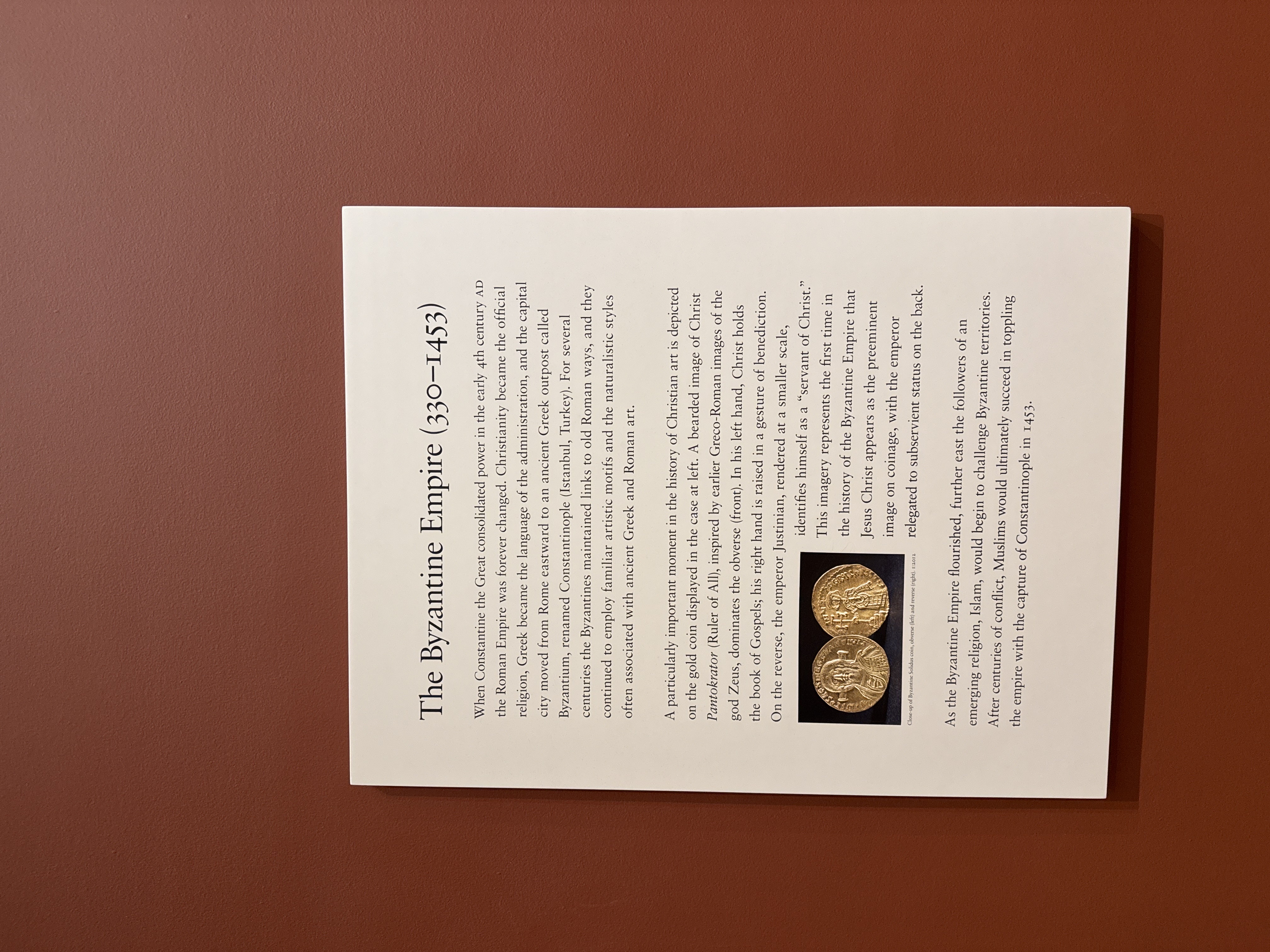
This exhibit tells about the Byzantine Empire, which lasted over a thousand years. You saw gold coins with Jesus and Emperor Justinian, and learned how the empire began and ended.
What is it?
The Byzantine Empire started when Emperor Constantine moved the capital of the Roman Empire to a city called Byzantium, which he renamed Constantinople (now Istanbul, Turkey). This happened around 330 AD. The empire combined Roman traditions with Greek language and Christian religion. It lasted until 1453, when the Ottoman Turks conquered Constantinople.
Who used it?
The Byzantine Empire was ruled by emperors who were seen as God's representatives on Earth. People from many different cultures lived there. The empire was Christian, and the church was very powerful. The coins you saw were used by people to buy and sell things, and they also showed the emperor's authority.
When and where?
The Byzantine Empire existed from about 330 to 1453 AD. It was centered in Constantinople, but at its height it controlled parts of Europe, Asia, and Africa. The empire was located at the crossroads of trade routes between East and West.
What does it tell us?
The coins with Jesus and Justinian show that religion and government were closely connected. The emperor wanted people to see that his power came from God. The empire's long history shows how a civilization can change and adapt over time, but also that no empire lasts forever.
Compared to today
Today, Istanbul is a city in Turkey. The Hagia Sophia, which was built by Emperor Justinian, is now a museum. Many modern laws and ideas about government come from the Byzantine Empire. The empire also preserved ancient Greek and Roman knowledge that later helped start the Renaissance in Europe.
Connections
- Byzantine Empire
- Constantine the Great
- Justinian I
- Byzantine Art
- Religion and Power
- Empire and Fall
- Christianity
- Islam
Next to find
- Find a Byzantine mosaic or icon in a museum.
- Look for other coins that show religious figures.
- Learn about the Ottoman Empire that conquered Constantinople.
- Visit a place that was part of the Byzantine Empire, like Greece or Turkey.
拜占庭帝国展品
这个展品讲述了持续一千多年的拜占庭帝国。你看到了带有耶稣和查士丁尼皇帝的金币,并了解了帝国的开始和结束。
这是什么?
拜占庭帝国始于君士坦丁皇帝将罗马帝国的首都迁至一个叫拜占庭的城市,他将其改名为君士坦丁堡(今土耳其伊斯坦布尔)。这大约发生在公元330年。帝国结合了罗马传统、希腊语言和基督教。它一直持续到1453年,奥斯曼土耳其人征服了君士坦丁堡。
谁使用了它?
拜占庭帝国由皇帝统治,他们被视为上帝在人间的代表。那里生活着许多不同文化的人。帝国是基督教国家,教会非常强大。你看到的钱币被用于买卖,同时也显示了皇帝的权威。
何时何地?
拜占庭帝国存在于约公元330年至1453年。它以君士坦丁堡为中心,但在鼎盛时期控制了欧洲、亚洲和非洲的部分地区。帝国位于东西方贸易路线的十字路口。
它告诉我们什么?
带有耶稣和查士丁尼的钱币表明宗教和政府紧密相连。皇帝希望人们看到他的权力来自上帝。帝国的悠久历史展示了一个文明如何随时间变化和适应,但也表明没有帝国是永恒的。
与今天相比
今天,伊斯坦布尔是土耳其的一个城市。由查士丁尼皇帝建造的圣索菲亚大教堂现在是一个博物馆。许多现代法律和政府理念来自拜占庭帝国。帝国还保存了古希腊和古罗马的知识,后来帮助欧洲开始了文艺复兴。
关联
接下来寻找
- 在博物馆里找到拜占庭的马赛克或圣像。
- 寻找其他带有宗教人物的钱币。
- 了解征服君士坦丁堡的奥斯曼帝国。
- 参观曾是拜占庭帝国一部分的地方,比如希腊或土耳其。