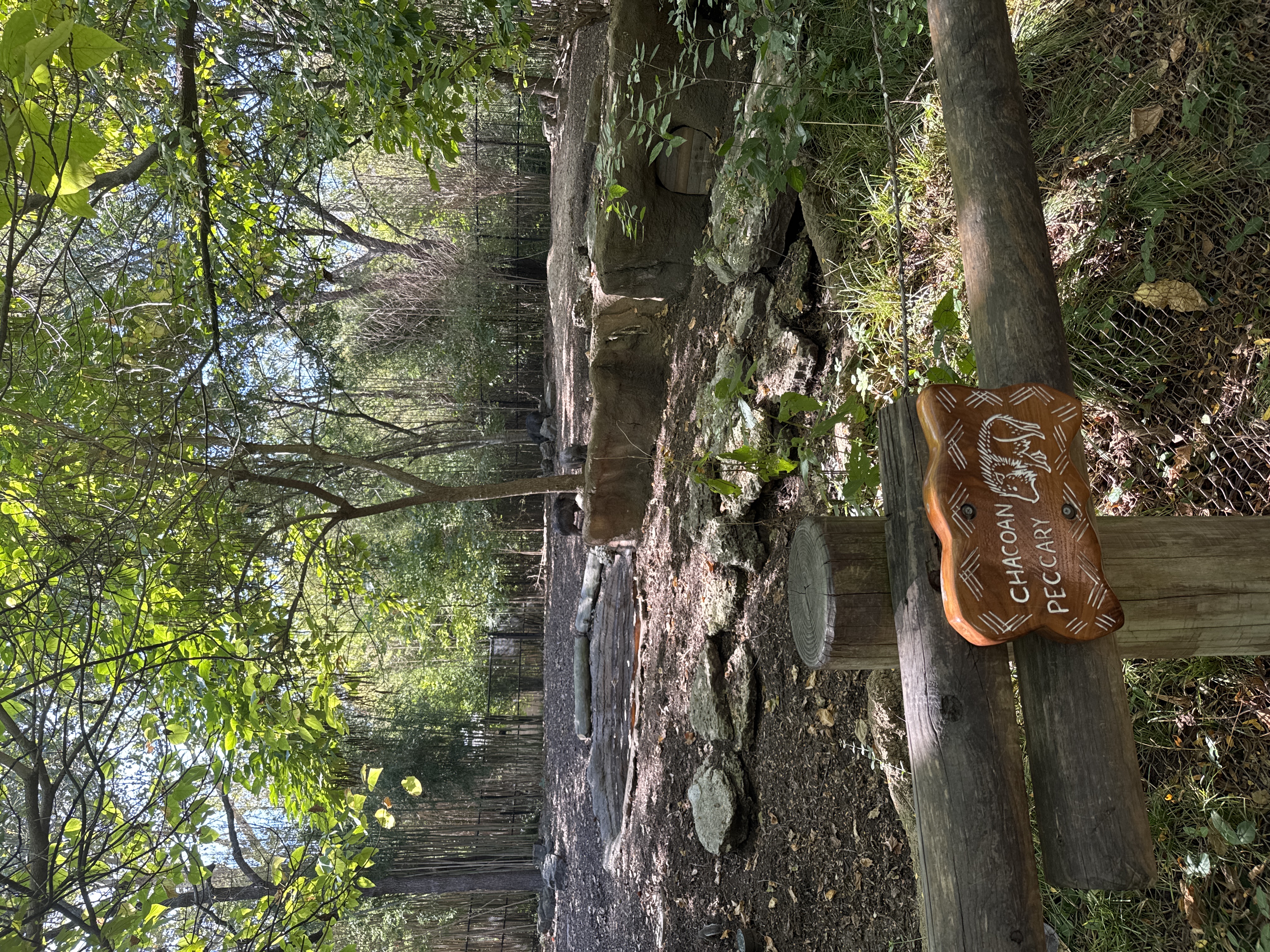
Chacoan Peccary
This is a pig-like animal that lives in South America. It was thought to be extinct but was found again in the 1970s. It is endangered because its home is being destroyed and people hunt it.
What is it?
The Chacoan peccary (Catagonus wagneri) is a medium-sized mammal that looks like a pig. It has a bristly coat, a snout, and sharp tusks. It lives in the dry forests and shrublands of the Gran Chaco region in Argentina, Paraguay, and Bolivia. It eats roots, fruits, and other plants.
How old?
This species has been around for thousands of years, but it was only discovered by scientists in the 1930s. It was thought to be extinct until 1975, when a population was found alive in the Gran Chaco.
What was it like?
The Chacoan peccary is well adapted to its dry, hot home. It can go for long periods without water, getting moisture from the plants it eats. It lives in small groups of 2 to 10 individuals. They communicate with grunts and clicks and are very alert to danger.
Why does it matter?
The Chacoan peccary is important because it is a unique species found only in the Gran Chaco. It helps spread seeds and maintain the health of the forest. Its rediscovery shows that even animals thought extinct can still be found if we protect their habitats.
Connections
Next to find
- Find another animal that was thought extinct and then rediscovered.
- Look for a map of the Gran Chaco and see what countries it covers.
- Find out what other animals live in the Gran Chaco.
- Learn about how scientists protect endangered species.
查科野猪
这是一种生活在南美洲的像猪的动物。人们曾认为它已经灭绝,但在1970年代又被重新发现。由于家园被破坏和人类捕猎,它濒临灭绝。
这是什么?
查科野猪(Catagonus wagneri)是一种中型哺乳动物,看起来像猪。它有刚毛、鼻子和锋利的獠牙。它生活在阿根廷、巴拉圭和玻利维亚的格兰查科地区的干燥森林和灌木丛中。它以根、果实和其他植物为食。
有多古老?
这个物种已经存在了数千年,但直到1930年代才被科学家发现。它被认为已经灭绝,直到1975年,在格兰查科发现了一个活体种群。
它是什么样的?
查科野猪很好地适应了干燥炎热的环境。它可以长时间不喝水,从吃的植物中获取水分。它们以2到10只的小群体生活。它们用咕噜声和咔哒声交流,对危险非常警觉。
为什么重要?
查科野猪很重要,因为它是格兰查科特有的独特物种。它帮助传播种子并维持森林健康。它的重新发现表明,即使被认为灭绝的动物,如果我们保护它们的栖息地,仍然可能被发现。
关联
接下来寻找
- 找到另一种被认为灭绝后又重新发现的动物。
- 找一张格兰查科的地图,看看它覆盖哪些国家。
- 找出格兰查科还生活着哪些其他动物。
- 了解科学家如何保护濒危物种。