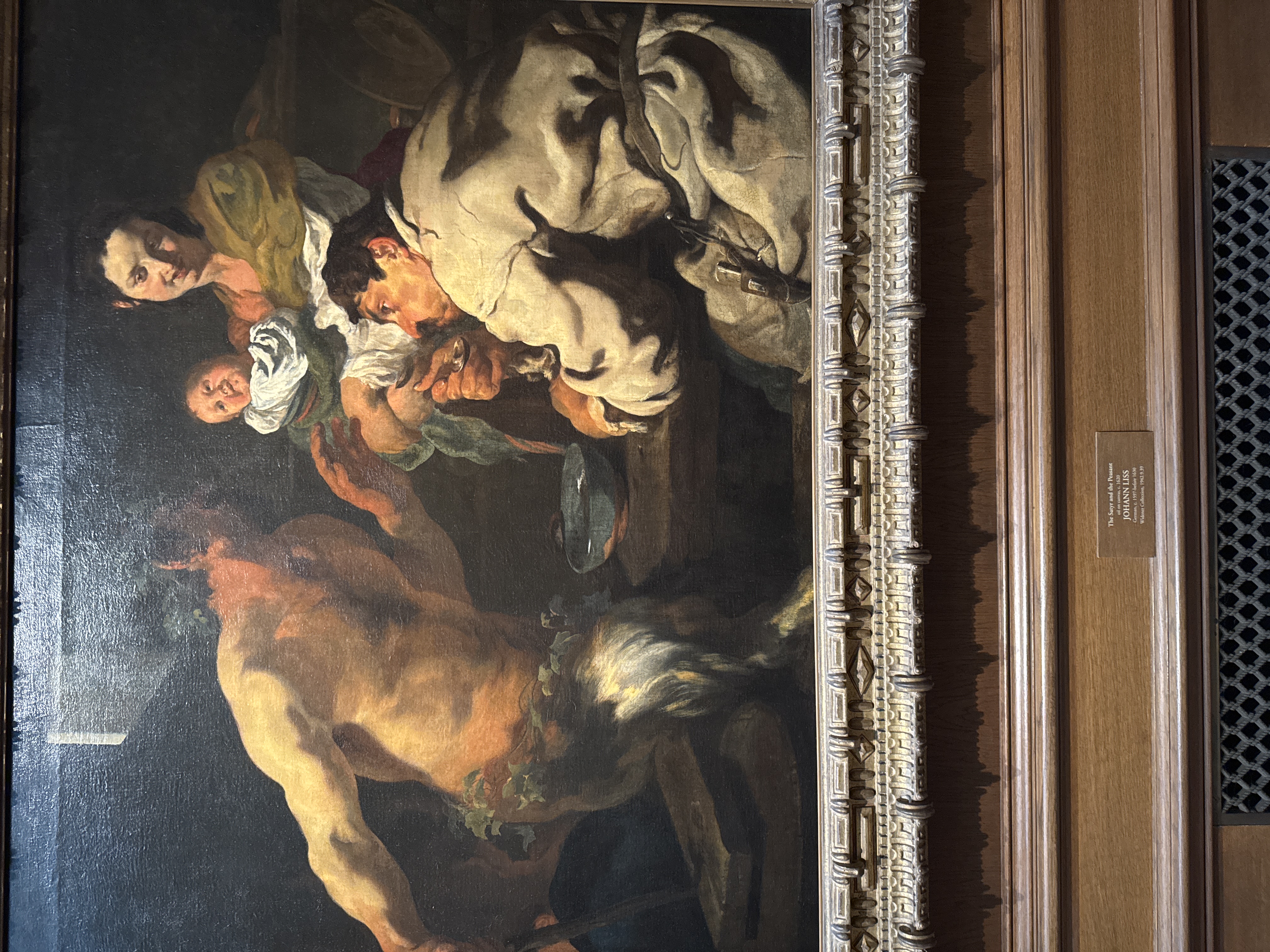
The Satyr and the Peasant
A painting of a funny creature from a story who visits a family and gets confused by what they do.
What do you see?
You see a satyr—a creature from Greek myths with goat legs and horns—standing in a peasant home. The satyr looks surprised. A farmer sits at a table with his family. There is food on the table. The farmer is blowing on his hands to warm them. The satyr is confused because earlier he saw the farmer blow on his food to cool it. How can the same breath both cool and warm?
Look closely
- Look at the satyr's face. What do you think he is feeling? Surprise? Confusion? Curiosity?
- Find the light source. Where is the light coming from? How does it make the scene feel?
- Look at the farmer's hands. What is he doing? Why might that confuse the satyr?
- Notice the colors. Are they bright or dark? Warm or cool? How do they make you feel?
- Look at the background. Is it detailed or simple? What does that tell you about the setting?
Style and technique
Johann Liss painted this in the Baroque style. Baroque art uses strong contrasts of light and shadow (called chiaroscuro) to make scenes dramatic. Liss used rich, warm colors—browns, reds, and golds—to make the scene feel cozy but also lively. The satyr's skin is painted with rough, quick brushstrokes, while the humans' faces are smoother. This contrast shows the difference between the wild satyr and the civilized family.
Feeling
This painting feels both funny and thoughtful. The satyr's confusion makes you smile, but it also makes you think about human habits. Why do we do things that seem strange to others? The warm light and the family together feel welcoming, but the satyr's presence adds a bit of mystery.
Connections
Try this
- Act out the story with a friend. One of you is the satyr, the other is the farmer. How would you show confusion?
- Find another painting that uses chiaroscuro. How is the light similar or different?
- Write your own short fable about a creature who doesn't understand something humans do.
Next to find
- A painting of another Aesop's fable, like "The Fox and the Grapes"
- A sculpture of a satyr or other mythical creature
- A Baroque painting with a different mood, like a quiet landscape
萨堤尔和农夫
一幅画,画中有一个来自故事的有趣生物,它拜访一家人,被他们的行为搞糊涂了。
你看到了什么?
你看到一个萨堤尔——希腊神话中长着山羊腿和角的生物——站在一个农夫家里。萨堤尔看起来很惊讶。一个农夫和他的家人坐在桌旁。桌上放着食物。农夫正在吹手取暖。萨堤尔很困惑,因为他之前看到农夫吹食物来冷却。同样的呼吸怎么能既冷却又取暖呢?
仔细观察
- 看看萨堤尔的脸。你觉得他在感受什么?惊讶?困惑?好奇?
- 找到光源。光从哪里来?它如何影响场景的氛围?
- 看看农夫的手。他在做什么?为什么这会让萨堤尔困惑?
- 注意颜色。它们是明亮的还是暗淡的?暖色还是冷色?它们让你感觉如何?
- 看看背景。它是细致的还是简单的?这告诉你关于场景的什么信息?
风格与技巧
约翰·利斯以巴洛克风格绘制了这幅画。巴洛克艺术使用强烈的明暗对比(称为明暗对照法)来营造戏剧性。利斯使用了丰富的暖色——棕色、红色和金色——使场景感觉舒适而生动。萨堤尔的皮肤用粗糙、快速的笔触绘制,而人类的面部则更平滑。这种对比显示了野性的萨堤尔与文明家庭之间的差异。
感受
这幅画既有趣又引人深思。萨堤尔的困惑让你微笑,但也让你思考人类的习惯。为什么我们要做那些在别人看来奇怪的事情?温暖的光线和一家人在一起的感觉很温馨,但萨堤尔的存在增添了一丝神秘。
关联
试试这个
- 和朋友一起表演这个故事。一个人扮演萨堤尔,另一个人扮演农夫。你会如何表现困惑?
- 找另一幅使用明暗对照法的画。光线有什么相似或不同?
- 自己写一个简短的寓言,关于一个不理解人类行为的生物。
接下来寻找
- 另一幅伊索寓言的画,比如《狐狸和葡萄》
- 萨堤尔或其他神话生物的雕塑
- 一幅不同氛围的巴洛克画作,比如安静的风景画