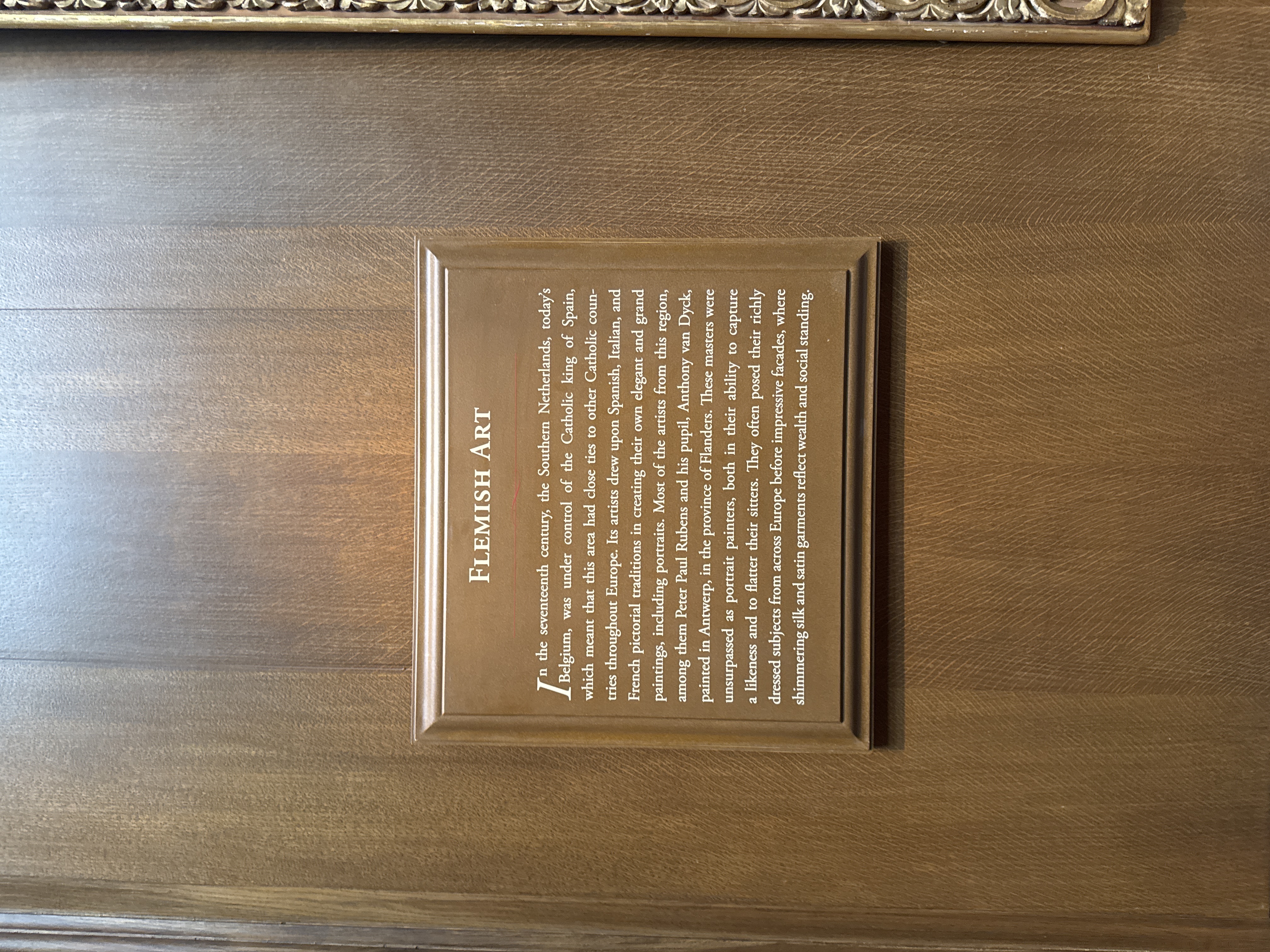
Flemish Art Panel
This panel tells you about Flemish art from the 1600s. It explains that artists in Flanders (now part of Belgium) were influenced by Spanish, Italian, and French painting. They became famous for their elegant portraits, especially Peter Paul Rubens and Anthony van Dyck.
What do you see?
You saw an informational panel at the museum. It has text and probably pictures about Flemish art. The panel talks about how Flemish artists in the 1600s were influenced by other European countries. It mentions that they were especially good at portrait painting. The panel names two famous artists: Peter Paul Rubens and his student Anthony van Dyck. They worked in the city of Antwerp. Their portraits show people in fancy clothes with shiny silk and satin, standing in grand backgrounds. The panel says these artists could capture a person's features and make them look even more charming.
Look closely
- Look at the portraits by Rubens and van Dyck. How do the people's clothes show their wealth?
- Can you see the shiny silk and satin fabrics? How did the artists paint them to look so real?
- What kind of backgrounds do you see behind the people? Are they inside a palace or outside in nature?
- How do the artists make the people look elegant and important?
- Compare a portrait by Rubens with one by van Dyck. Do you see any differences in style?
Style and technique
This panel is about Flemish Baroque art. Baroque art is known for drama, rich colors, and strong contrasts of light and shadow. Rubens and van Dyck were masters of this style. They used oil paint to create realistic textures like silk and skin. They often placed their subjects in grand settings with columns or landscapes. The portraits are not just pictures of faces; they tell you about the person's status and personality.
Feeling
Looking at these portraits, you might feel impressed by the people's elegance and power. The shiny clothes and grand backgrounds make them seem important. The artists wanted you to admire the people they painted. The panel helps you understand why these portraits were so valued.
Connections
Try this
- Find a portrait by Rubens or van Dyck online or in a book. Look at the person's face and clothes. What do you think their life was like?
- Try drawing a portrait of someone you know. Make them look elegant by adding fancy clothes or a grand background.
- Imagine you are a Flemish painter in the 1600s. A rich merchant asks you to paint their portrait. What would you include to show their wealth?
Next to find
- A painting by Peter Paul Rubens in a museum or online.
- A painting by Anthony van Dyck. Compare it with Rubens' work.
- A portrait from another country or time period. How is it different from Flemish portraits?
- Look for other Flemish Baroque artworks, like still lifes or religious scenes.
佛兰德斯艺术展板
这块展板向你介绍了17世纪的佛兰德斯艺术。它解释了佛兰德斯(现在是比利时的一部分)的艺术家受到西班牙、意大利和法国绘画的影响。他们以优雅的肖像画闻名,尤其是彼得·保罗·鲁本斯和安东尼·范·戴克。
你看到了什么?
你在博物馆看到了一块信息展板。上面有文字,可能还有关于佛兰德斯艺术的图片。展板谈到17世纪佛兰德斯的艺术家如何受到其他欧洲国家的影响。它提到他们特别擅长肖像画。展板提到了两位著名艺术家:彼得·保罗·鲁本斯和他的学生安东尼·范·戴克。他们在安特卫普市工作。他们的肖像画展示穿着华丽衣服的人物,衣服上有闪亮的丝绸和缎子,背景宏伟。展板说这些艺术家能够捕捉人物的特征,并让他们看起来更有魅力。
仔细观察
- 看看鲁本斯和范·戴克的肖像画。人物的衣服如何显示他们的财富?
- 你能看到闪亮的丝绸和缎子面料吗?艺术家是如何把它们画得如此逼真的?
- 人物背后的背景是什么样的?是在宫殿里还是在大自然中?
- 艺术家如何让人物看起来优雅而重要?
- 比较鲁本斯和范·戴克的一幅肖像画。你看到风格上的差异了吗?
风格与技巧
这块展板是关于佛兰德斯巴洛克艺术的。巴洛克艺术以戏剧性、丰富的色彩和强烈的明暗对比著称。鲁本斯和范·戴克是这种风格的大师。他们使用油画颜料来创造逼真的质感,如丝绸和皮肤。他们经常将人物置于有柱子或风景的宏伟背景中。这些肖像画不仅仅是面孔的图片;它们告诉你关于人物地位和个性的信息。
感受
看着这些肖像画,你可能会对人物的优雅和权力印象深刻。闪亮的衣服和宏伟的背景让他们看起来很重要。艺术家希望你能欣赏他们所画的人物。展板帮助你理解为什么这些肖像画如此珍贵。
关联
试试这个
- 在网上或书中找一幅鲁本斯或范·戴克的肖像画。观察人物的脸和衣服。你认为他们的生活是什么样的?
- 试着为你认识的一个人画一幅肖像。通过添加华丽的衣服或宏伟的背景让他们看起来优雅。
- 想象你是17世纪的一位佛兰德斯画家。一位富有的商人请你画肖像。你会加入什么来显示他的财富?
接下来寻找
- 在博物馆或网上找一幅彼得·保罗·鲁本斯的画作。
- 找一幅安东尼·范·戴克的画作。与鲁本斯的作品比较。
- 找一幅来自其他国家或时期的肖像画。它与佛兰德斯肖像画有什么不同?
- 寻找其他佛兰德斯巴洛克艺术品,如静物画或宗教场景。