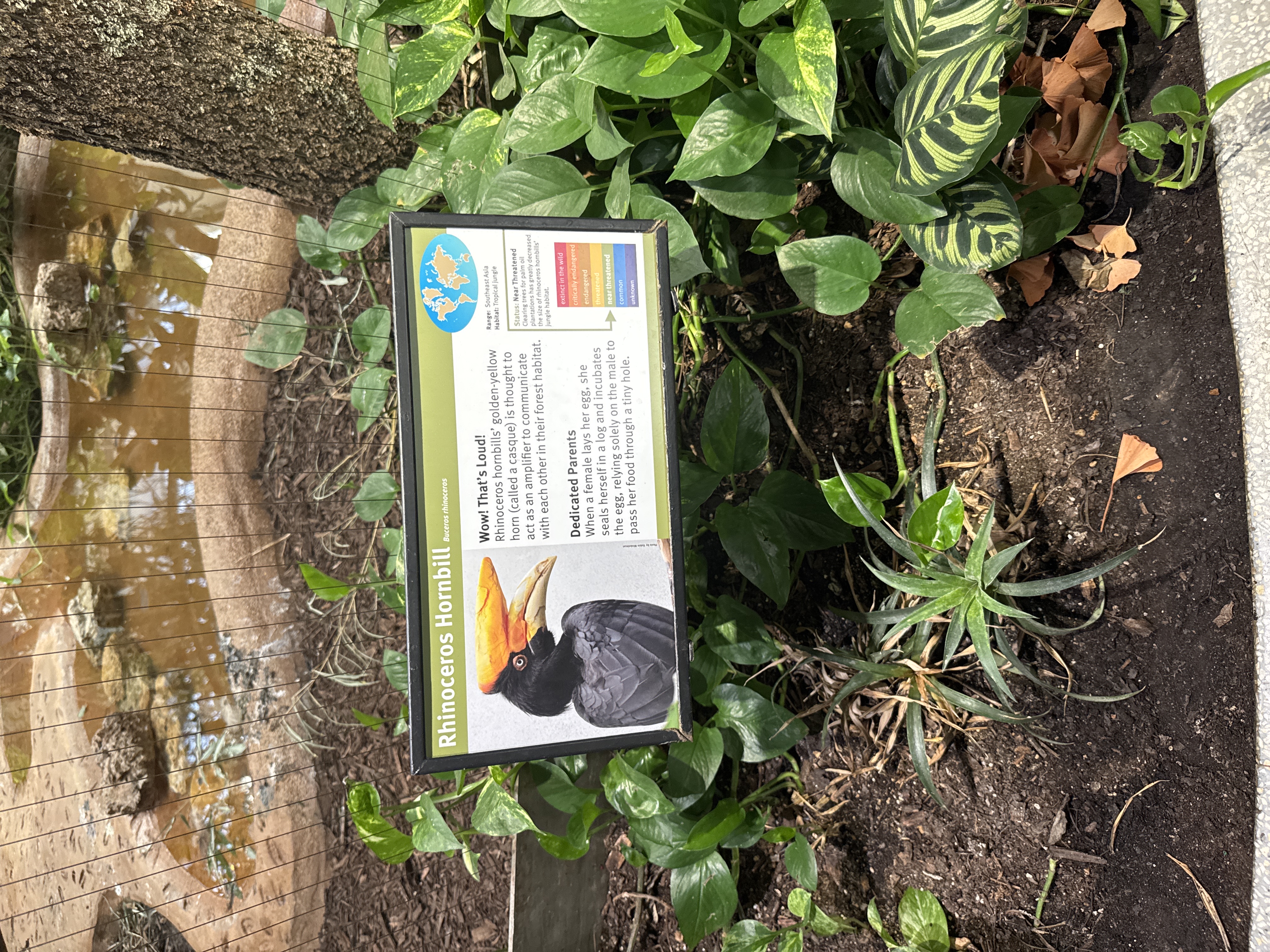
Rhinoceros Hornbill
This is a large bird from Southeast Asian rainforests with a big yellow horn on its beak. It uses that horn to make loud calls, and the mother bird seals herself in a tree hole to keep her babies safe.
Where is it from?
The Rhinoceros Hornbill lives in the tropical rainforests of Southeast Asia, including countries like Thailand, Malaysia, Indonesia, and Brunei. These forests are hot, wet, and full of tall trees where the hornbill can find fruit and nest.
What is it for?
This bird is a fruit-eater, and it helps the forest by spreading seeds. Its big yellow casque (the horn) is not just for show — it helps amplify its calls so other hornbills can hear it through the dense forest. The hornbill also has a special way of nesting: the female uses mud to seal herself inside a tree hole, leaving only a small slit. The male brings food to her and the chicks until they are ready to come out.
Who uses it?
The Rhinoceros Hornbill is an important part of its ecosystem. It is also a symbol in the cultures of some indigenous people in Borneo, who use its feathers and casque in traditional ceremonies.
Tradition
In some parts of Southeast Asia, the Rhinoceros Hornbill is considered a sacred bird. Its image appears in art and stories. The unique nesting behavior — where the female is sealed in the tree — is a remarkable tradition of nature that has been observed for centuries.
Other cultures with similar things
Other hornbill species, like the Great Hornbill in India and the Helmeted Hornbill in Southeast Asia, also have casques and similar nesting habits. Many cultures around the world have birds that are symbols of wisdom or protection.
Connections
Next to find
- Find a picture of a hornbill's nest hole in a tree.
- Look for other birds that use their beaks to make sounds.
- Discover another animal that seals itself in a shelter for protection.
犀鸟
这是一种来自东南亚雨林的大型鸟类,喙上有一个大的黄色角冠。它用这个角冠发出响亮的声音,鸟妈妈把自己封在树洞里保护宝宝的安全。
它从哪里来?
犀鸟生活在东南亚的热带雨林中,包括泰国、马来西亚、印度尼西亚和文莱等国家。这些森林炎热、潮湿,长满了高大的树木,犀鸟可以在那里找到果实和筑巢的地方。
它有什么用?
这种鸟以水果为食,通过传播种子帮助森林。它的大黄色角冠(角)不仅仅是为了装饰——它有助于放大叫声,让其他犀鸟在茂密的森林中听到。犀鸟还有一种特殊的筑巢方式:雌鸟用泥巴把自己封在树洞里,只留下一个小缝隙。雄鸟给雌鸟和雏鸟送食物,直到它们准备好出来。
谁使用它?
犀鸟是其生态系统的重要组成部分。它也是婆罗洲一些原住民文化中的象征,他们用犀鸟的羽毛和角冠进行传统仪式。
传统
在东南亚的一些地区,犀鸟被视为神圣的鸟类。它的形象出现在艺术和故事中。独特的筑巢行为——雌鸟被封在树里——是一个了不起的自然传统,已被观察了几个世纪。
其他文化中的类似事物
其他犀鸟物种,如印度的大犀鸟和东南亚的盔犀鸟,也有角冠和类似的筑巢习性。世界各地许多文化中都有象征智慧或保护的鸟类。
关联
接下来找什么
- 找一张犀鸟在树上的巢穴图片。
- 寻找其他用喙发出声音的鸟类。
- 发现另一种把自己封在庇护所里保护的动物。